Marcus Trescothick Biography: Inspiring Cricket Legacy
The complete story of the former England opener, Somerset legend, respected coach and mental-health ambassador

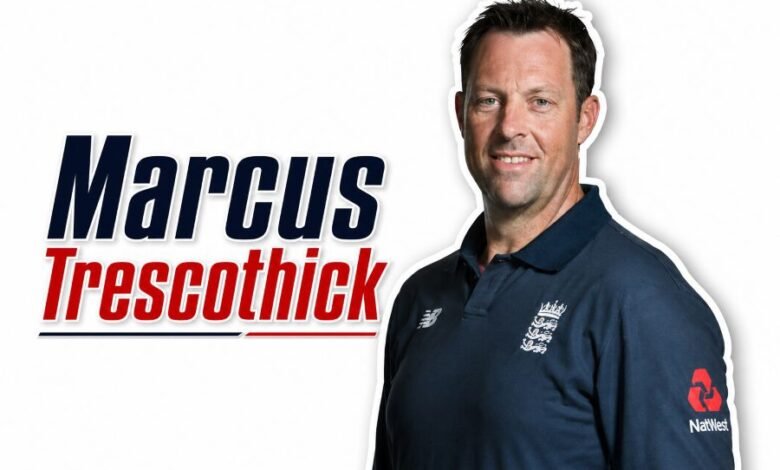
introdution
Marcus Trescothick is a former England international cricketer, Somerset legend and professional batting coach. He became famous for his powerful left-handed batting, attacking starts and important role in England’s 2005 Ashes victory.
His career also carries a deeper meaning. After experiencing serious anxiety during overseas tours, he spoke openly about mental health and helped change how professional sport discusses emotional wellbeing.
Today, he is respected not only for his runs and records but also for his coaching work, honesty and support for other players.
Quick Bio
| Field | Information |
|---|---|
| Full Name | Marcus Edward Trescothick |
| Known As | Marcus Trescothick |
| Nicknames | Tresco, Banger |
| Date of Birth | 25 December 1975 |
| Age | 50 years old |
| Birthplace | Keynsham, Somerset, England |
| Nationality | English |
| Profession | Former cricketer and cricket coach |
| Playing Role | Opening batter |
| Batting Style | Left-handed |
| Bowling Style | Right-arm medium |
| Main County Team | Somerset |
| International Career | 2000–2006 |
| Test Matches | 76 |
| ODI Matches | 123 |
| Spouse | Hayley Rowse |
| Children | Two daughters |
| Major Honour | OBE |
| Current Role | England men’s batting and assistant coach |
| Famous For | England cricket, Somerset records and mental-health advocacy |
Who Is Marcus Trescothick?
Marcus Trescothick is one of the most respected opening batters England produced during the early 2000s.
He played international cricket between 2000 and 2006 and represented Somerset throughout his long first-class career. His ability to attack fast bowlers made him an important part of England’s batting order.
Like another English opening batter profile, his story includes international success, county commitment, difficult pressure and personal resilience.
He later moved into professional coaching and became part of England’s senior coaching structure.
Early Life and Childhood
Marcus Edward Trescothick was born on 25 December 1975 in Keynsham, Somerset.
Cricket was part of his life from childhood. His father, Martyn Trescothick, played club cricket and was closely connected with Keynsham Cricket Club.
Marcus began playing at a young age and developed quickly. He represented school, regional and county-level youth teams while still in his teenage years.
In 1991, he scored around 4,000 runs across different school and youth competitions. That remarkable season earned him recognition as one of England’s most promising young players.
Education and Cricket Training
Trescothick attended St Anne’s Primary School and later studied at Sir Bernard Lovell School.
His most important sporting education came through school cricket, Keynsham Cricket Club, Somerset youth teams and England’s age-group system.
He learned to face senior bowlers while still young. Playing adult club cricket helped him develop confidence, physical strength and a fearless approach.
Somerset recognised his potential and offered him a professional contract in 1992.
Family Background
Marcus grew up in a supportive sporting family.
His father played an important role in his early development and encouraged his interest in cricket. His mother is known as Linda, while his older sister is named Anna.
The family’s connection with Keynsham Cricket Club gave him access to regular practice, competitive matches and experienced players.
This stable background helped him move from talented schoolboy to professional county cricketer.
Somerset Career Beginning
Trescothick made his first-class debut for Somerset against Lancashire in 1993.
He was still a teenager and had not yet developed into the confident opening batter later seen in international cricket. His early county years included both promising innings and periods of inconsistency.
His first Somerset century came against Surrey in 1994. That innings offered an early sign of the long county career ahead.
Over time, he became one of Somerset’s most important players and one of the leading batters in English domestic cricket.
Breakthrough Before England Selection
His international opportunity did not arrive immediately.
Trescothick spent several seasons developing his game and learning how to build longer innings. Although his talent was clear, he needed greater consistency to gain the attention of England selectors.
A major turning point came when he scored 167 against Glamorgan in 1999. England coach Duncan Fletcher noticed the innings and became interested in his attacking style.
His performances earned him an England A opportunity and moved him closer to the national team.
England ODI Debut
Trescothick made his One Day International debut against Zimbabwe at The Oval on 8 July 2000.
He scored 79 and immediately looked comfortable at international level. His performance showed that he could attack quality bowling without losing control.
His quick scoring and strong off-side shots gave England a more positive option at the top of the order.
The innings helped him earn a Test opportunity only a few weeks later.
England Test Debut
He made his Test debut against the West Indies at Old Trafford on 3 August 2000.
Trescothick scored 66 in his first Test innings and shared an important partnership with Alec Stewart.
His performance confirmed that he had the technique and confidence required for international cricket.
He soon became England’s regular opener in both Test and ODI cricket. His progress also became an important part of wider cricket and football coverage during a changing period for English sport.
Batting Style
Trescothick was a naturally aggressive left-handed batter.
He was especially strong when cutting, driving and pulling fast bowlers. He often scored quickly against the new ball and placed early pressure on opposition attacks.
His technique did not always look traditional, but his timing and hand-eye coordination made him highly effective.
He could also play long Test innings when the situation demanded patience. This balance between control and aggression made him dangerous in different formats.
International Career Statistics
His full international figures can be checked through his official ESPNcricinfo player profile.
| Format | Matches | Runs | Average | Highest Score | Centuries | Fifties |
|---|---|---|---|---|---|---|
| Tests | 76 | 5,825 | 43.79 | 219 | 14 | 29 |
| ODIs | 123 | 4,335 | 37.37 | 137 | 12 | 21 |
| T20Is | 3 | 166 | 55.33 | 72 | 0 | 2 |
| First-Class | 391 | 26,234 | 41.05 | 284 | 66 | 127 |
| List A | 372 | 12,229 | 37.28 | 184 | 28 | 63 |
These numbers place him among the strongest England opening batters of his generation.
The 2005 Ashes Victory
The 2005 Ashes series became one of the greatest chapters of his career.
England defeated Australia 2–1 in a dramatic five-Test contest. It was England’s first Ashes series victory since 1986–87.
Trescothick scored 431 runs in the series and regularly gave England positive starts against a world-class Australian attack.
His calmness and attacking intent helped England build confidence. He was surrounded by players such as Michael Vaughan, Andrew Flintoff, Kevin Pietersen and Steve Harmison.
Winning the Ashes remained one of his proudest cricket achievements.
Best Innings and Career Highlights
His highest Test score was 219 against South Africa at The Oval in 2003.
He also scored 193 against Pakistan in Multan in 2005 while leading England. Although England lost that match, the innings demonstrated his concentration and ability against spin.
In ODI cricket, his highest score was 137. He finished his international career with 12 ODI centuries, which was an England record at the time.
He also served as a temporary England captain in Tests and ODIs when regular leaders were unavailable.
Mental-Health Challenges
During England’s tour of India in 2006, Trescothick experienced severe anxiety and found it increasingly difficult to remain away from home.
He returned to England before the tour was completed. Similar difficulties later affected his ability to travel with international and county teams.
At first, many cricket followers did not fully understand his situation. Mental health was not discussed as openly in professional sport as it is today.
Trescothick later explained his experiences through interviews and his autobiography. His honesty helped fans and athletes understand that successful sportspeople can also experience serious emotional difficulties.
His journey shares the same message of sports courage and resilience: personal strength is not only shown through competition but also through recovery and openness.
International Retirement
His last appearances for England came in 2006.
Trescothick attempted to return to overseas touring but continued to experience anxiety when travelling away from home.
In March 2008, he officially retired from international cricket. The decision ended a successful England career earlier than many expected.
He chose to protect his health and remain closer to his family. It was a difficult choice, but it allowed him to continue playing county cricket for Somerset.
Long Somerset Career
Trescothick remained a major force in county cricket after leaving the international game.
He scored two double-centuries during the 2007 season and continued producing large totals for Somerset.
In 2009, he was the leading run-scorer in the County Championship and won the Professional Cricketers’ Association Player of the Year award.
He became Somerset captain in 2010. Under his leadership, the county challenged for major domestic trophies and regularly competed near the top of English cricket.
His continued success showed that a professional athlete journey can remain meaningful even after an international chapter ends.
Somerset Records
Trescothick became Somerset’s leading first-class century-maker.
He scored 52 first-class centuries for the county and passed the previous Somerset record held by Harold Gimblett.
His highest score for Somerset was 284 against Northamptonshire in 2007.
He also became the county’s record holder for first-class outfield catches. His safe hands made him an excellent slip fielder throughout his career.
Across all competitions, his runs, centuries and long service gave him legendary status at Somerset.
Retirement From Professional Cricket
In June 2019, Trescothick announced that he would retire at the end of the season.
His professional career had lasted more than 25 years. Very few modern cricketers remain with one county for such a long period.
He finished with more than 26,000 first-class runs and 66 first-class centuries.
His farewell was celebrated by Somerset supporters, teammates and former England players.
Coaching Career
Trescothick began helping younger players before his playing career had fully ended.
He worked with Somerset and later supported England’s batting groups. In 2020, he joined an England training programme as a batting coach.
He became a permanent member of the England coaching setup and worked under different head coaches.
His experience as a former opener allowed him to guide batters facing pressure, technical problems and international expectations.
Interim England Head Coach Role
In 2024, the England and Wales Cricket Board appointed him interim white-ball head coach after Matthew Mott left the position.
He led England during the home white-ball series against Australia and later worked with the side during further limited-overs assignments.
Brendon McCullum later became England’s head coach across Test, ODI and T20I cricket.
Trescothick continued as part of the senior coaching group, focusing mainly on batting. The ECB continues to describe him as an England assistant coach.
Current Status in 2026
As of June 2026, Marcus Trescothick remains connected with England’s men’s coaching structure as a batting and assistant coach.
His work involves supporting international batters, preparing players for different conditions and helping the coaching team develop match strategies.
He brings experience from Test cricket, limited-overs cricket, captaincy and long county seasons.
His calm public manner also helps him work with players facing intense expectations.
Coaching Style and Personality
Trescothick is viewed as a calm, direct and supportive coach.
He does not appear interested in creating attention around himself. His focus is normally on helping players feel prepared and confident.
His own difficult experiences allow him to understand that performance problems are not always caused by poor technique.
This makes him valuable when supporting both established stars and young English sports talent moving into high-pressure professional environments.
Marriage and Children
Trescothick is married to Hayley Rowse.
The couple married in January 2004 and have two daughters. His wife and children have remained an important part of his life.
During his international career, separation from his family became increasingly difficult during long overseas tours.
He has spoken publicly about how family support helped him understand and manage his mental-health challenges.
Book and Public Work
His autobiography is titled Coming Back to Me.
The book was written with sports journalist Peter Hayter and published in 2008. It discusses his childhood, cricket career, family life and mental-health experiences.
The book won the William Hill Sports Book of the Year Award.
It was widely praised because it discussed anxiety and depression with unusual honesty for a professional sports autobiography.
Charity and Mental-Health Advocacy
Trescothick became a mental-health ambassador for the Professional Cricketers’ Association.
He has supported campaigns encouraging players to discuss anxiety, depression and emotional pressure.
His work helped create a more open environment within professional cricket. Younger players gained a visible example of a successful athlete who received help and continued building a valuable career.
This contribution became one of the most important parts of his public legacy.
Awards and Honours
Trescothick received several major awards during and after his playing career.
He was named a Wisden Cricketer of the Year and won the PCA Player of the Year award three times.
He received an MBE following England’s 2005 Ashes victory.
In the 2024 New Year Honours, he was appointed OBE for services to mental ill health through his work as a mental-health ambassador.
He has also received an honorary doctorate from the University of Bath and honorary life membership of Marylebone Cricket Club.
Legacy
Marcus Trescothick’s legacy reaches beyond cricket statistics.
He scored more than 10,000 international runs and played a major role in one of England’s greatest Ashes victories.
At Somerset, he became a record-breaking batter, long-serving captain and respected club figure.
His most lasting influence may come from his openness about mental health. By sharing his experience, he helped professional sport become more understanding and supportive.
He proved that asking for help is not a sign of weakness. It can be an important part of recovery, leadership and long-term success.
Interesting Facts
- He was born on Christmas Day in 1975.
- His best Test score was 219.
- He scored 12 ODI centuries for England.
- He helped England win the 2005 Ashes.
- He played his entire senior county career for Somerset.
- His autobiography won a major sports book award.
- He received an OBE for his mental-health work.
- He later became an England batting and assistant coach.
Conclusion
Marcus Trescothick built an outstanding cricket career through natural talent, aggressive batting and long-term dedication.
His England career included thousands of runs, international centuries and the unforgettable 2005 Ashes victory. His Somerset career made him one of the greatest players in the county’s history.
However, his importance goes beyond the boundary. His decision to speak openly about anxiety helped change attitudes across cricket and wider professional sport.
Today, his work as a coach and mental-health ambassador continues to influence players, supporters and future generations.
FAQs
Who is Marcus Trescothick?
He is a former England and Somerset opening batter who later became a professional cricket coach.
When was he born?
He was born on 25 December 1975.
Where was he born?
He was born in Keynsham, Somerset, England.
Is he married?
He is married to Hayley Rowse.
Does he have children?
He and his wife have two daughters.
How many Test runs did he score?
He scored 5,825 runs in 76 Test matches.
Why did he leave international cricket?
He retired after anxiety and difficulty with overseas touring affected his health.
What is his current role?
He works within England’s men’s coaching setup as a batting and assistant coach.
Did he win the Ashes?
He was an important member of the England team that won the 2005 Ashes.
Why did he receive an OBE?
He received the honour for his services to mental-health awareness.