Blazertje: Meaning, Style, Fit and How to Wear It
A simple guide to the Dutch fashion word, what it means, and how a blazer can fit into everyday outfits.

Introduction
Blazertje is a Dutch word connected to the familiar fashion item known as a blazer. More precisely, the official Dutch spelling list identifies blazertje as the diminutive form of blazer. In simple English, it can be understood as “little blazer” or “small blazer.”
However, this does not mean that a blazertje is an officially defined new type of jacket. The word may describe a smaller blazer, a cute or informal blazer, or simply a blazer spoken about in a softer, more casual way. Its exact meaning depends on the context.
This guide explains what the term means, how it relates to a standard blazer, common styles you may see, and simple ways to wear one.
What Does Blazertje Mean?
The clearest meaning comes from Dutch.
The official Dutch Word List records blazertje as a noun and directly connects it with the base word blazer, which it identifies as a clothing item.
A diminutive normally gives a word the idea of something smaller or little. In Dutch, diminutive forms are very common, and their meaning can sometimes also feel friendly, informal, or affectionate rather than referring only to physical size.
Therefore, a simple translation is:
Blazer → Blazertje → Little or small blazer
It is important not to turn that translation into a strict fashion definition. A retailer or speaker may use the word for different blazer designs.
Is Blazertje a Special Type of Blazer?
Not necessarily.
Some online fashion articles describe the term as if it specifically means a soft, lightweight, relaxed blazer. That can describe certain garments sold or discussed using the word, but the Dutch linguistic meaning itself is broader.
A blazer is generally a jacket that is less formal than a matching suit jacket. Dictionaries describe blazers as sports-style or relatively lightweight jackets, often worn separately from matching trousers or skirts.
So, when you see blazertje online, look at the actual product description rather than assuming it has one fixed construction.
Check details such as:
- Length
- Fabric
- Lining
- Number of buttons
- Shoulder structure
- Sleeve length
- Fit
- Single-breasted or double-breasted design
These details tell you more about the garment than the name alone.
Blazertje vs Blazer
The two words are closely connected rather than being competing fashion categories.
| Term | Simple Meaning |
|---|---|
| Blazer | A separate tailored or semi-tailored jacket |
| Blazertje | Dutch diminutive form of blazer |
| Suit jacket | Usually designed as part of a matching suit |
| Cropped blazer | A blazer with a shorter body length |
| Oversized blazer | A blazer intentionally cut with a roomier shape |
A standard blazer can be formal, casual, fitted, loose, long, cropped, lined, or unlined. The same variety may appear in products described informally as a blazertje.
Common Blazer Styles You May Find
Modern blazer collections include many different cuts. Dutch fashion retailers currently offer styles including classic, double-breasted, cropped, oversized, belted, open-front, and short-sleeve blazers.
Classic Blazer
A classic design usually has a familiar tailored shape with lapels and front buttons.
It works well when you want an outfit that feels neat without wearing a complete suit.
Cropped Blazer
A cropped version finishes higher on the body than a traditional jacket.
It can work with high-waisted trousers, jeans, skirts, or dresses.
Oversized Blazer
An oversized design has a deliberately roomy silhouette.
Instead of choosing an incorrectly fitted larger size, look for a jacket designed specifically as an oversized cut. This usually creates a more balanced shape.
Double-Breasted Blazer
A double-breasted jacket uses overlapping front panels and two visible columns of buttons.
It can create a more structured appearance than many single-breasted designs.
Open Blazer
An open-front blazer may have no traditional button closure.
It can be useful for relaxed outfits because it works easily as an extra layer.
How to Wear a Blazertje Casually
You do not need formal clothing to wear a blazer.
For a simple daytime outfit, try combining one with:
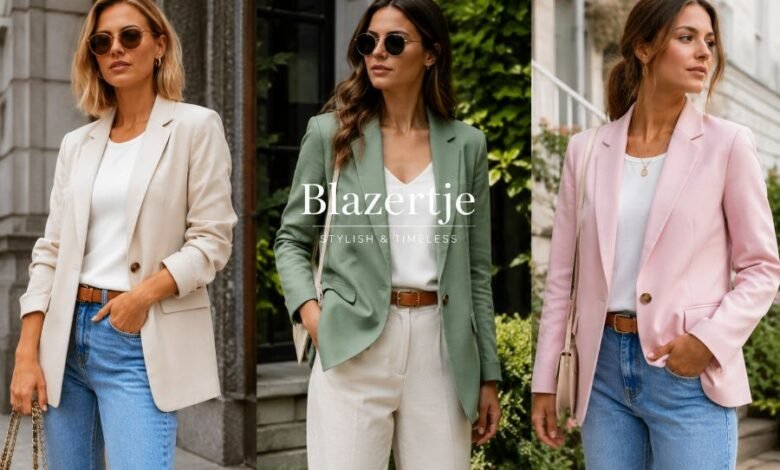
T-shirt + jeans + blazer + trainers
This keeps the base of the outfit relaxed while the jacket adds some structure.
Another easy combination is:
Plain top + relaxed trousers + blazer + flat shoes
Neutral colours can create a simple look, while a brighter jacket can become the main visual feature.
How to Style It for Work
A blazer can also fit naturally into many workplace wardrobes.
A straightforward combination could include a plain shirt or top, tailored trousers, and simple shoes.
For a more coordinated look, choose similar colours for the trousers and jacket. They do not need to be an actual matching suit unless the setting requires one.
Workplace dress standards differ, so consider your employer’s dress code before choosing very casual fabrics, oversized cuts, or bright designs.
How to Wear One in Warm Weather
Fabric choice matters when temperatures rise.
Instead of focusing only on appearance, check the product label and construction. A lightly constructed jacket may feel more comfortable than a thick, heavily lined design.
You could pair it with:
- A light top
- Loose trousers
- A simple dress
- A skirt
- Smart shorts where appropriate
- Comfortable summer footwear
The jacket should still suit the setting where you plan to wear it.
Choosing the Right Fit
A good-looking blazer does not need to fit tightly.
Start by checking the shoulders. The garment should match the intended cut. A deliberately oversized jacket will sit differently from a fitted style.
Next, check whether you can move your arms comfortably.
Also look at:
Sleeve Length
Sleeves vary between designs. Some are full length, while others are intentionally shorter.
Jacket Length
Longer blazers create a different shape from cropped versions. Choose according to the look you want rather than assuming one length is correct for everyone.
Front Closure
If the jacket is designed to button, check whether it closes comfortably without pulling excessively across the front.
Layering Space
If you plan to wear knitwear or thicker tops underneath, leave enough room for those layers.
Choosing a Colour
There is no single best colour for a blazertje.
Black, navy, grey, beige, and other neutral shades are usually easy to combine with different outfits.
However, colours such as green, red, pink, burgundy, or blue can work when you want the jacket to stand out.
Patterns may also change the feel of an outfit.
The better choice depends on what you already own and how often you expect to wear the jacket.
What to Check Before Buying
Do not buy based on the product name alone.
Check the complete listing and look for:
- Accurate size information
- Fabric composition
- Jacket measurements
- Care instructions
- Lining information
- Closure style
- Pocket details
- Sleeve length
- Photos from different angles
- Return conditions when shopping online
If two brands both describe an item as a blazertje, the jackets can still have completely different cuts and materials.
How to Care for a Blazer
Always follow the care label attached to your garment.
Different fabrics require different cleaning methods. A jacket made from one material may be washable, while another could require more careful cleaning.
Avoid assuming that every blazer can go directly into a washing machine.
After wearing it, hanging the jacket properly may also help it keep its shape.
If the fabric wrinkles, follow the manufacturer’s instructions before using an iron or steamer.
Why Is the Word Appearing in English Searches?
The term is Dutch, but internet searches do not remain inside one language.
Fashion products, social media posts, blogs, online shops, and search engines can introduce regional words to international audiences.
As a result, an English-speaking reader may encounter blazertje and wonder whether it is a brand, a fashion trend, or a completely separate garment.
The most reliable starting point is much simpler: it is the Dutch diminutive of blazer.
Anything more specific should be understood from the context in which the word appears.
Is Blazertje a Brand?
The word itself should not automatically be treated as a brand name.
It exists as a Dutch dictionary word connected to the clothing term blazer.
However, businesses, websites, or sellers may also use ordinary words as names. Therefore, when you encounter “Blazertje” with a capital letter, check whether the page is talking about the Dutch word, a particular product, or a business using that name.
Frequently Asked Questions
What is a blazertje?
A blazertje is the Dutch diminutive form of the word blazer. In simple English, it can mean a little or small blazer.
Is blazertje an English word?
It comes from Dutch. English-speaking websites may use the term, but its linguistic origin is Dutch.
Does blazertje always mean a lightweight blazer?
No. The official word is a diminutive of blazer. A particular product may be lightweight or relaxed, but that is not a universal definition of the word.
Is it different from a blazer?
It is based directly on the Dutch word for blazer. The difference is mainly the diminutive form rather than an officially separate category of clothing.
Can women and men wear blazers?
Yes. Blazers are produced in many cuts and styles, and the suitable garment depends on the individual design, fit, and intended wearer.
Can I wear a blazer with jeans?
Yes. A blazer with jeans is a simple way to combine tailored and casual clothing.
Can a blazer be worn without a suit?
Yes. This is one of the main ways a blazer differs from a traditional matching suit jacket. A blazer is commonly worn as a separate jacket.
How should I choose the right blazertje?
Look beyond the name. Check its measurements, fabric, shoulder shape, jacket length, closure, lining, care label, and intended fit.
Final Thoughts
Blazertje is easier to understand once its Dutch origin is clear. It is the diminutive form of blazer, making “little blazer” a useful simple translation. It should not automatically be treated as a completely new or strictly defined fashion category.
If you see the word while shopping, focus on the actual garment details. A product may be cropped, oversized, fitted, lightweight, structured, casual, or formal depending on its design.
Understanding this distinction helps shoppers avoid confusing online descriptions and makes the term much easier to recognise.