Youssef Amyn: Inspiring Rise of Iraq’s Talented Winger
Discover Youssef Amyn’s age, early life, clubs, international career, playing style and journey to the 2026 FIFA World Cup.

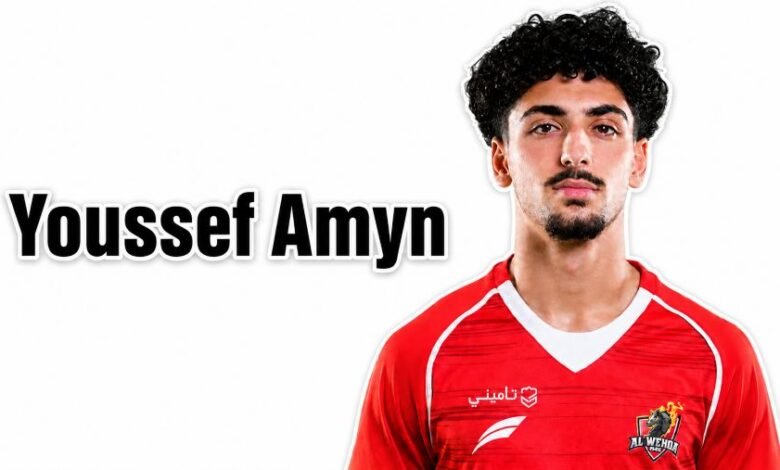
Introduction
Youssef Amyn is a German-born Iraqi professional footballer known for his speed, creativity and attacking ability.
His full name is Youssef Wali Faeq Amyn. He currently plays as a winger for AEK Larnaca in Cyprus and represents the Iraq national team.
Amyn became widely known after scoring on his senior international debut for Iraq. He later represented the country at the AFC Asian Cup, Paris Olympics and 2026 FIFA World Cup.
His inspiring journey includes football in Germany, the Netherlands, Saudi Arabia and Cyprus.
Quick Bio
| Field | Details |
|---|---|
| Full Name | Youssef Wali Faeq Amyn |
| Known As | Youssef Amyn |
| Date of Birth | 21 August 2003 |
| Age | 22 years old |
| Birthplace | Essen, Germany |
| Nationality | German-Iraqi |
| Sporting Nation | Iraq |
| Profession | Professional footballer |
| Position | Winger and attacking midfielder |
| Preferred Foot | Right |
| Height | Around 1.72 metres |
| Current Club | AEK Larnaca |
| Shirt Number | 8 |
| National Team | Iraq |
| Famous For | Scoring on his Iraq debut and reaching the 2026 World Cup |
Who Is Youssef Amyn?
Youssef Amyn is an Iraqi international footballer who was born and developed as a player in Germany.
He mainly plays as a winger but can also operate as an attacking midfielder. His flexibility allows him to play on either side of the attack or behind a central striker.
Amyn represented Germany at youth level before choosing to play senior international football for Iraq.
He is best known for scoring against Indonesia during his first senior appearance for Iraq in November 2023.
Youssef Amyn Age
Youssef Amyn was born on 21 August 2003. He is 22 years old as of July 2026.
He was born in Essen, Germany. The German Football Association and several established football databases support 21 August 2003 as his correct birth date.
Nationality and Background
Amyn is commonly described as German-Iraqi.
He was born in Germany and spent his childhood and early football career there. However, he represents Iraq at senior international level.
His background gave him the opportunity to receive European academy training while building a strong connection with Iraqi football.
Early Life and Football Development
Amyn started playing organised football at a young age. His first known youth club was TuS Querenburg.
His talent was noticed by VfL Bochum, where he spent several years developing his basic skills. He later joined the Borussia Dortmund academy.
Borussia Dortmund is respected for developing young footballers. Training there allowed Amyn to improve his technique, movement and decision-making.
In 2020, he left Dortmund and joined Viktoria Köln. This move gave him a clearer path towards senior professional football.
No dependable public source confirms his school, university education or academic qualifications.
Viktoria Köln Career
Youssef Amyn made his professional debut for Viktoria Köln on 13 March 2021.
He entered the match against MSV Duisburg as a substitute. Viktoria Köln won the game 3–1.
Amyn was only 17 years old at the time. His appearance made him the youngest player to represent Viktoria Köln in a professional match.
He later became the youngest goalscorer in the club’s history.
Amyn recorded 35 appearances and five goals in Germany’s 3. Liga. He was also part of the Viktoria Köln squads that won the Middle Rhine Cup in 2021 and 2022.
His time with the club proved that he could compete against experienced senior players.
Move to Feyenoord
Amyn joined Feyenoord’s under-21 team in September 2022.
The move gave him an opportunity to continue his development at one of the biggest football clubs in the Netherlands.
He played 16 matches and scored once for Feyenoord Under-21 during the 2022–23 season.
Amyn also made an unofficial first-team appearance in a friendly against NEC in March 2023. However, he did not play a competitive match for Feyenoord’s senior team.
After one season in the Netherlands, he returned to Germany in search of regular senior football.
Eintracht Braunschweig Career
Amyn signed for Eintracht Braunschweig on 18 July 2023.
He received the number 17 shirt and signed a two-year contract. The move gave him an opportunity to compete in Germany’s 2. Bundesliga.
Amyn made nine league appearances during the 2023–24 season. He did not record a goal or assist in those matches.
Regular playing time was difficult to secure, but the experience allowed him to compete at a higher senior level.
Al-Wehda Career
In August 2024, Amyn left Eintracht Braunschweig and joined Al-Wehda in Saudi Arabia.
The transfer introduced him to a new league and football culture. He also received more regular senior playing time.
Available league records credit him with 29 Saudi Pro League appearances and four goals during the 2024–25 season.
This period helped him gain valuable experience before returning to European football.
AEK Larnaca Career
Youssef Amyn joined AEK Larnaca on 29 July 2025.
He passed his medical examination and signed a two-year contract with the Cypriot club.
As of July 2026, the official AEK Larnaca squad lists Amyn as a first-team forward wearing number 8.
His move to Cyprus gave him another opportunity to play European club football and continue developing as an attacking player.
Readers interested in another young European footballer can explore the Khéphren Thuram career story.
Germany Youth Career
Before representing Iraq, Amyn played for Germany at under-19 level.
He made 10 appearances and scored two goals for Germany U19.
Amyn scored during his Germany U19 debut against Switzerland in September 2021. Representing Germany’s youth team showed that he was considered one of the promising footballers in his age group.
He later chose Iraq for his senior international career.
Iraq Youth Career
Amyn represented Iraq at the 2023 FIFA U-20 World Cup in Argentina.
He played in all three of Iraq’s group matches. The team did not reach the knockout stage, but the competition gave him valuable international experience.
Amyn was later selected for Iraq’s team at the Paris 2024 Olympic Games.
He appeared in all three group matches. Iraq defeated Ukraine but lost against Argentina and Morocco.
Senior Iraq Debut
Youssef Amyn made his senior Iraq debut on 16 November 2023.
He entered as a substitute during a 2026 World Cup qualifier against Indonesia. Amyn then scored as Iraq completed an impressive 5–1 victory.
Scoring on an international debut is a rare achievement. It immediately made him more recognisable among Iraqi football supporters.
Amyn discussed his international journey in an official FIFA interview.
AFC Asian Cup
Amyn was selected for Iraq’s squad at the 2023 AFC Asian Cup, which was played in Qatar in early 2024.
He appeared in all four of Iraq’s matches.
Iraq produced a strong group-stage performance and defeated Japan. However, its campaign ended with a defeat against Jordan in the round of 16.
The tournament gave Amyn experience of playing under pressure in front of large international audiences.
International Goals
Amyn scored his first senior international goal against Indonesia in November 2023.
His second goal came against Oman on 19 November 2024. He scored the only goal as Iraq secured an important 1–0 World Cup qualifying victory.
Both goals came during Iraq’s journey towards the 2026 FIFA World Cup.
2026 FIFA World Cup Journey
Amyn was part of the Iraq generation that ended the country’s 40-year wait for another World Cup appearance.
Iraq defeated Bolivia 2–1 in an inter-confederation play-off to qualify for the 2026 tournament. It was the country’s first World Cup qualification since 1986.
Amyn was included in Iraq’s World Cup squad. The team faced strong opponents including France, Norway and Senegal.
Iraq did not advance from the group stage, but reaching the competition was still a historic achievement for the country and its players.
Playing Position and Style
Youssef Amyn mainly plays as a winger.
His strongest qualities include speed, movement, close control and the ability to attack open spaces. He can move inside from a wide position or stay near the touchline to make the pitch wider.
His main positions include:
- Left winger
- Right winger
- Attacking midfielder
- Right midfielder
- Supporting forward
Amyn is right-footed but can play on both sides of the attack. His flexibility allows coaches to use him in different formations.
He is most effective when he receives the ball in space and can run directly towards defenders.
Career Statistics
Football statistics change whenever a player makes another appearance. The following figures provide a simple career snapshot:
- Viktoria Köln: 35 league appearances and five goals
- Feyenoord senior team: No competitive appearances
- Feyenoord Under-21: 16 appearances and one goal
- Eintracht Braunschweig: Nine league appearances
- Al-Wehda: 29 Saudi Pro League appearances and four goals
- Germany U19: 10 appearances and two goals
- Iraq senior team: More than 25 appearances and two goals by 2026
Some databases count cup, youth and unofficial matches differently. This can create small differences between published totals.
Youssef Amyn Height
Most established records list Youssef Amyn at approximately 1.72 metres, or around 5 feet 8 inches.
A few databases list him at 1.75 metres. The small difference may come from older measurements or different club records.
His game depends more on speed, movement and balance than physical height.
Family and Personal Life
Youssef Amyn has kept most details about his family away from public attention.
Reliable public sources do not provide confirmed names for his parents. Claims about his family should be treated carefully unless Amyn or an official source confirms them.
There is also no dependable public confirmation that he is married or has a publicly known partner.
Youssef Amyn Net Worth
Youssef Amyn’s verified net worth is not publicly available.
Some websites publish estimated wealth figures without providing financial records or direct evidence. These estimates should not be treated as confirmed facts.
His known income comes from professional football contracts, match payments and possible performance bonuses. His exact salary has not been officially disclosed.
Awards and Achievements
Amyn’s important career achievements include:
- Middle Rhine Cup winner with Viktoria Köln in 2021
- Middle Rhine Cup winner with Viktoria Köln in 2022
- Germany U19 international
- Participant at the 2023 FIFA U-20 World Cup
- Participant at the 2023 AFC Asian Cup
- Paris 2024 Olympian
- Scored on his senior Iraq debut
- Scored Iraq’s winning goal against Oman
- Member of Iraq’s 2026 FIFA World Cup squad
Interesting Facts
- Amyn started playing organised football at a very young age.
- He trained in the academies of VfL Bochum and Borussia Dortmund.
- He became Viktoria Köln’s youngest professional player.
- He scored during his Germany U19 debut.
- He also scored during his senior Iraq debut.
- He has played club football in four different countries.
- He represented Iraq at youth, Olympic and senior levels.
- He played at the Asian Cup, Olympic Games and FIFA World Cup.
- He can perform in several attacking positions.
- He was only 17 when he made his professional debut.
Why Is Youssef Amyn Famous?
Youssef Amyn is famous for being an Iraqi international footballer who developed in Germany and scored on his senior international debut.
He also gained attention by representing Iraq at the AFC Asian Cup, Paris Olympics and 2026 FIFA World Cup.
His goals against Indonesia and Oman are among the most memorable moments of his international career.
FAQs
What is Youssef Amyn’s full name?
His full name is Youssef Wali Faeq Amyn.
How old is Youssef Amyn?
He is 22 years old as of July 2026.
When was Youssef Amyn born?
He was born on 21 August 2003.
Where was Youssef Amyn born?
He was born in Essen, Germany.
What is Youssef Amyn’s nationality?
He is commonly described as German-Iraqi and represents Iraq internationally.
Which club does Youssef Amyn play for?
He plays for AEK Larnaca in Cyprus.
What position does Youssef Amyn play?
He mainly plays as a winger but can also operate as an attacking midfielder.
What is Youssef Amyn’s shirt number?
AEK Larnaca’s current squad lists him as number 8.
How tall is Youssef Amyn?
He is commonly listed at around 1.72 metres.
Did Youssef Amyn play for Germany?
He represented Germany at under-19 level before choosing Iraq for his senior international career.
Did Youssef Amyn score on his Iraq debut?
Yes. He scored against Indonesia during his senior debut on 16 November 2023.
Did Youssef Amyn play at the Olympics?
Yes. He represented Iraq at the Paris 2024 Olympic Games.
Did Youssef Amyn play at the 2026 World Cup?
Yes. He was included in Iraq’s squad after the country qualified for its first World Cup since 1986.
Is Youssef Amyn married?
No dependable public source has confirmed that he is married.
What is Youssef Amyn’s net worth?
His net worth has not been officially disclosed. Online estimates are not supported by dependable financial evidence.
Conclusion
Youssef Amyn is a talented German-born Iraqi footballer whose career has developed through patience, hard work and international experience.
He progressed through respected German youth academies, became a professional player as a teenager and later competed in the Netherlands, Saudi Arabia and Cyprus.
His decision to represent Iraq created some of the biggest moments of his career. He scored on his senior debut, played at the Asian Cup and Olympics, and became part of the Iraq squad that reached the 2026 FIFA World Cup.
At 22, Amyn still has many years to develop. His speed and ability to play in several attacking positions make him an important footballer to watch.