Big Red Combine Harvester: What It Is and How It Works
A simple guide to the powerful red farm machine that cuts crops, separates grain, and helps farmers complete harvest work faster.

Introduction
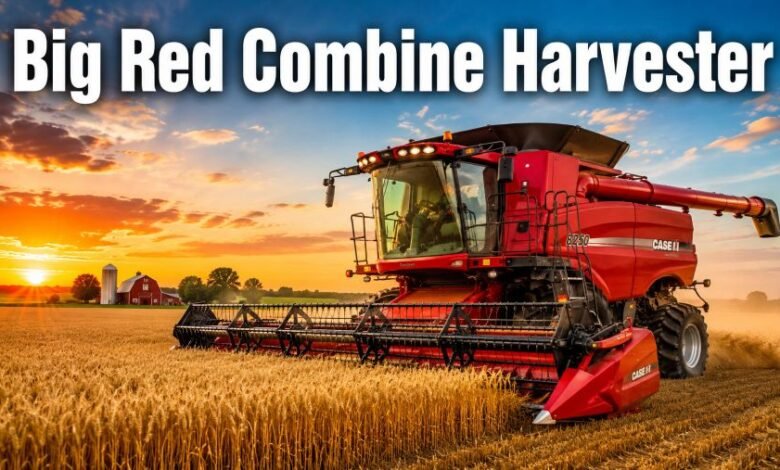
A Big Red Combine Harvester usually means a large red agricultural machine used to harvest grain crops. It is not normally the official name of one specific model. The phrase is commonly used to describe powerful red combine harvesters, especially machines produced by brands such as Case IH.
A combine harvester performs several important jobs during one movement through a field. It cuts the crop, separates the grain from the stalks, cleans the grain, stores it inside a tank, and sends unwanted straw or plant material back onto the field.
Modern red combines may also include cameras, sensors, automatic settings, digital displays, GPS guidance, and systems that help reduce grain loss.
What Is a Big Red Combine Harvester?
A big red combine harvester is a self-powered farming machine designed mainly for harvesting grain and seed crops.
The word combine is used because the machine combines several traditional harvesting jobs into one process. Instead of using separate machines for cutting, threshing, and cleaning, a combine completes these tasks while moving through the crop.
A modern combine normally:
- Cuts the standing crop
- Pulls the crop into the machine
- Separates grain from stalks and husks
- Cleans the grain
- Stores clean grain in an internal tank
- Spreads or collects the remaining straw
This makes harvesting quicker and reduces the number of workers and machines needed in the field.
Is Big Red Combine Harvester a Brand or Model?
“Big Red Combine Harvester” is generally a descriptive search term rather than an official product name.
People may use it when they see a large red harvesting machine but do not know its exact brand or model number. Red combine harvesters are strongly linked with Case IH, whose current harvesting range includes Axial-Flow and AF Series machines.
For example, Case IH describes its AF11 as a Class 10+ combine with a 775-horsepower engine, dual-rotor technology, a 567-bushel grain tank, and an unloading rate of six bushels per second. These figures show how large and powerful modern red harvesters can be, but smaller models are also available for farms with different needs.
Therefore, the term may refer to many machines rather than one single harvester.
How Does a Big Red Combine Harvester Work?
A combine harvester follows a clear harvesting process. Each part of the machine performs a separate task.
1. The Header Cuts the Crop
The wide attachment at the front of the combine is called the header or cutterbar.
Its cutting blades move through crops such as wheat or barley. A rotating reel helps guide the cut plants towards the centre of the header.
Different crops may require different headers. Grain headers are commonly used for wheat and barley, while special attachments may be used for maize, rice, sunflower, canola, or soybeans.
CLAAS explains that modern cutterbars can be designed for crops including wheat, rye, barley, oats, rice, maize, soybeans, sunflowers, and rapeseed.
2. The Feeder Moves the Crop Inside
After the crop is cut, it moves into the feeder house.
The feeder house carries the harvested material from the header into the main body of the combine. A steady and even crop flow is important because sudden bunches of material can reduce performance or cause blockages.
3. The Threshing System Separates the Grain
Threshing is the process of removing grain or seed from the rest of the plant.
Inside the machine, a drum or rotor moves the crop through a controlled space. The movement releases the grain from the heads, pods, or cobs.
Traditional combines may use a drum and straw-walker design. Many modern red combines use a rotary or axial-flow system.
4. The Grain Is Separated and Cleaned
After threshing, the machine must separate clean grain from small pieces of straw, dust, husk, and chaff.
Fans and sieves work together during this stage. Air removes lighter material, while the grain passes through carefully adjusted openings.
The cleaned grain then moves towards the grain tank.
5. Clean Grain Enters the Tank
The combine carries a large grain tank above its main body.
When the tank becomes full, an unloading auger transfers the grain into a tractor trailer, grain cart, or transport vehicle. On large farms, unloading may happen while the combine continues moving.
This saves time because the operator does not always need to stop harvesting.
6. Straw Leaves the Machine
The remaining straw moves towards the back of the combine.
Depending on the farm’s needs, the machine may:
- Chop the straw into small pieces
- Spread it across the soil
- Place it in rows for baling
- Collect it for animal bedding or other uses
Correct straw management can support the next stage of field preparation.
Main Parts of a Big Red Combine Harvester
Although designs vary, most large combines contain similar working parts.
Header
The header cuts and gathers the crop. Its width affects how much crop the machine can collect during each pass.
Reel
The reel gently pushes standing plants towards the cutting blades and feeder system.
Feeder House
This section carries the harvested crop into the threshing area.
Rotor or Threshing Drum
The rotor or drum separates grain from the plant material.
Concaves
Concaves are curved surfaces under the rotor or drum. Grain passes through their openings after being separated.
Cleaning Fan and Sieves
These parts remove dust, husks, chaff, and other light material from the grain.
Grain Elevator
The grain elevator carries cleaned grain upwards into the storage tank.
Grain Tank
The grain tank stores harvested grain until it can be unloaded.
Unloading Auger
The long unloading pipe transfers grain from the combine into another vehicle.
Engine
A powerful diesel engine operates the cutting, threshing, cleaning, driving, hydraulic, and electronic systems.
Operator Cab
The cab gives the driver a clear view of the field. Modern cabs may include touchscreens, cameras, automatic steering, performance information, and grain-loss monitors.
Crops Harvested by Red Combine Harvesters
A combine can harvest different crops when it has the correct header and machine settings.
Common examples include:
- Wheat
- Barley
- Rice
- Maize
- Soybeans
- Oats
- Canola
- Rye
- Sorghum
- Sunflowers
- Peas
- Beans
One machine may be used for several crops during the year. However, the operator must adjust rotor speed, fan speed, sieve openings, header height, and travel speed for each crop.
Using incorrect settings can damage grain or leave part of the harvest in the field.
Modern Technology in Big Red Combines
Modern combine harvesters are more than large cutting machines. Many now use digital technology to support the operator.
Automatic Harvest Settings
Sensors can measure crop flow, grain quality, engine load, and grain loss.
Some systems automatically change machine settings when field conditions change. Case IH says its Harvest Command system can adjust combine operation according to goals such as grain quality, grain savings, or higher throughput.
GPS Guidance
GPS steering helps the combine follow straighter and more accurate paths.
This can reduce missed crop, repeated harvesting, operator tiredness, and unnecessary fuel use.
Yield Mapping
Yield-monitoring systems record how much grain is collected in different parts of the field.
Farmers can use this information to identify productive and weak areas. The data may support future decisions about seed, fertiliser, drainage, and soil improvement.
Grain Cameras
Some machines use cameras to give the operator a closer view of harvested grain.
The operator may notice broken kernels, unwanted plant material, or other quality problems without leaving the cab.
Remote Farm Management
Connected machines can share information with farm-management platforms.
Farm owners may review machine location, fuel use, work progress, yield information, and maintenance alerts from another device.
Benefits of Using a Large Combine Harvester
A large combine offers several important benefits.
Faster Harvesting
A wide header and powerful processing system allow more crop to be harvested during each hour.
This is especially useful when farmers have only a short period of suitable weather.
Lower Labour Requirements
One trained operator can complete work that once required many people and several machines.
Better Grain Handling
Correctly adjusted cleaning and threshing systems can produce cleaner grain and reduce damage.
Reduced Field Time
Finishing a field quickly may protect the crop from rain, wind, insects, disease, or over-ripening.
Accurate Farm Data
Modern combines can collect information about yield, moisture, field location, and machine performance.
Possible Limitations
A big red combine harvester is useful, but it may not be suitable for every farm.
High Purchase Cost
Large combines are expensive machines. The total cost may also include headers, transport equipment, fuel, insurance, servicing, and replacement parts.
Maintenance Requirements
Combines contain many moving parts. Belts, chains, bearings, blades, filters, fluids, sensors, and hydraulic systems require regular inspection.
Skilled Operation
The driver must understand machine controls, crop conditions, safety procedures, and correct settings.
Field Size
A very large harvester may be difficult to use in small, narrow, wet, or uneven fields.
Storage Space
The machine and its header require secure storage when the harvest season ends.
How to Choose the Right Combine Harvester
Farmers should not choose a machine only because it looks large or powerful.
Important questions include:
- Which crops will the machine harvest?
- How many hectares or acres must be completed?
- How short is the local harvesting window?
- Which header sizes can fit the fields?
- Are parts and trained technicians available nearby?
- How much fuel will the machine use?
- Can local roads and bridges handle its size?
- Is a new machine necessary, or would a used combine be suitable?
- Does the farm have enough grain carts and transport vehicles?
- Will advanced digital features provide useful value?
A smaller reliable machine with strong local support may be more useful than a very large combine that is difficult to maintain.
New Versus Used Big Red Combine Harvester
Both new and used machines can be sensible choices.
Advantages of a New Combine
A new combine may offer:
- Manufacturer warranty
- Newer technology
- Better operator comfort
- Updated safety systems
- Fewer immediate repairs
- Dealer training and support
Advantages of a Used Combine
A used machine may offer:
- Lower purchase cost
- Slower depreciation
- Simpler technology
- Familiar controls
- Easier access for farms with limited budgets
Before purchasing a used combine, inspect the engine, rotor, concaves, sieves, chains, belts, bearings, tyres, tracks, electronics, unloading system, and header.
Service records can also show whether the machine received regular maintenance.
Combine Harvester Safety
A big combine can be dangerous when it is operated carelessly.
Important safety rules include:
- Read the operator’s manual
- Keep children and visitors away from the working area
- Stop the engine before removing a blockage
- Remove the key before carrying out repairs
- Wait for every moving part to stop
- Keep guards and covers correctly fitted
- Use steps and handrails when entering the cab
- Check lights and warning signs before road travel
- Avoid working near unsafe slopes or soft ground
- Keep suitable fire extinguishers on the machine
Dust, straw, and dry plant material can collect around hot engine and exhaust parts. The University of Minnesota Extension advises cleaning farm machinery because dry material around combines can increase fire risk.
Daily Maintenance Checklist
Before beginning work, the operator should check:
- Engine oil
- Coolant
- Hydraulic fluid
- Fuel level
- Air filters
- Tyre or track condition
- Cutting blades
- Belts and chains
- Bearings
- Warning lights
- Cameras and mirrors
- Grain tank
- Unloading auger
- Fire extinguishers
- Areas where straw or dust has collected
After harvesting, the machine should be cleaned and inspected. Small problems are easier and cheaper to repair before they become serious failures.
Why Farmers Like Large Red Combines
Large red combine harvesters attract attention because they look powerful, modern, and productive.
However, their real value comes from the work they perform. A suitable combine can help a farm:
- Harvest at the correct time
- Reduce grain losses
- Complete more land each day
- Improve operator comfort
- Collect useful field information
- Protect crop quality
- Reduce dependence on manual labour
The best machine is not always the biggest one. It is the machine that matches the crops, field size, local conditions, available budget, and support network.
Frequently Asked Questions
What does Big Red Combine Harvester mean?
It usually describes a large red machine used to harvest grain crops. It is generally not the official name of one model.
Which company makes red combine harvesters?
Case IH is one of the best-known manufacturers of red combine harvesters. Other machines may also be painted or customised in red.
What does a combine harvester do?
It cuts the crop, separates grain from plant material, cleans the grain, stores it, and manages the remaining straw.
Can one combine harvest different crops?
Yes. A combine can harvest several crops when the correct header, attachments, and machine settings are used.
Can a combine harvest wheat?
Yes. Wheat is one of the main crops harvested by combine harvesters.
Can it harvest maize?
Yes, but maize normally requires a specialised corn or maize header.
Why are combine harvesters so large?
A larger machine can carry a wider header, process more crop, store more grain, and complete large fields faster.
How much does a big red combine harvester cost?
The price depends on the brand, model, age, condition, header, technology, country, taxes, and dealer support. Buyers should request a complete quotation that includes the required attachments.
Is a large combine suitable for a small farm?
Not always. Small farms may benefit from a smaller machine, a used combine, shared ownership, or a harvesting contractor.
Final Thoughts
The Big Red Combine Harvester is best understood as a general name for a large red grain-harvesting machine rather than one exact product.
It combines cutting, threshing, separating, cleaning, storing, and unloading into one continuous operation. Modern versions may also use GPS, sensors, cameras, automated controls, and yield-mapping technology.
A large combine can make harvesting faster and more efficient, but size alone should not guide a buying decision. Farmers must also consider crop type, land area, maintenance, dealer support, operating cost, safety, and local field conditions.