Anjali Tendulkar: Doctor, Family and Inspiring Work
The verified story of Anjali Tendulkar’s medical education, marriage to Sachin Tendulkar, children, career decisions and charitable leadership

Introduction
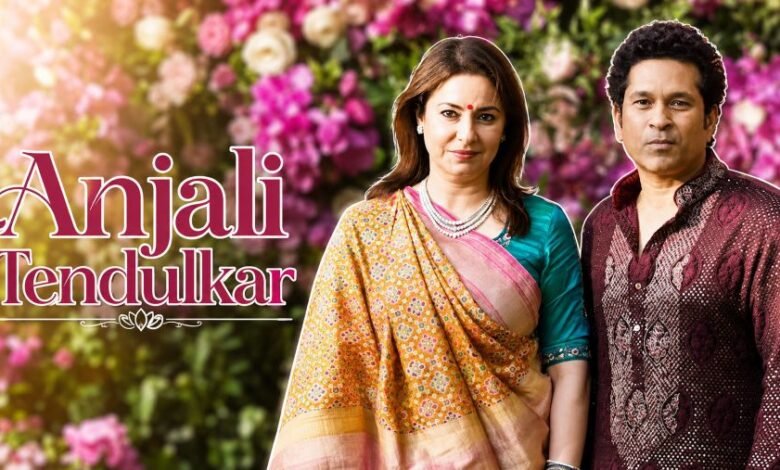
Anjali Tendulkar is an Indian paediatrician, philanthropist and organisational leader. She is widely known as the wife of former Indian cricketer Sachin Tendulkar, but her own story includes medical education, professional sacrifice, family leadership and social work.
She trained as a doctor before placing her medical career on hold to support her family during Sachin’s demanding international cricket journey. In later years, she returned to public professional life through SRT Sports Management and the Sachin Tendulkar Foundation.
Her journey is not simply the story of a famous cricketer’s wife. It is also about education, responsibility, partnership and using professional knowledge to help children.
Quick Bio
| Detail | Verified information |
|---|---|
| Full public name | Dr Anjali Tendulkar |
| Birth name | Anjali Mehta |
| Widely reported date of birth | 10 November 1967 |
| Age | 58 years old as of August 2026 |
| Birthplace | Mumbai, Maharashtra, India |
| Nationality | Indian |
| Profession | Paediatrician and philanthropist |
| Medical college | Grant Medical College and Sir J.J. Group of Hospitals |
| Husband | Sachin Tendulkar |
| Marriage date | 24 May 1995 |
| Children | Sara Tendulkar and Arjun Tendulkar |
| Foundation role | Director and co-founder |
| Known for | Medical background, family support and charitable leadership |
The date 10 November 1967 is widely reported by established media publications. However, her current official professional profile does not publish a birth date, so it should not be described as confirmed through a public birth record.
Who Is Anjali Tendulkar?
Anjali Tendulkar is a medically trained paediatrician who later became an important leader in the Tendulkar family’s charitable and professional organisations.
Many people first learned about her because of her marriage to Sachin Tendulkar. Sachin is one of the most celebrated cricketers in history, and his long international career brought worldwide attention to his family.
However, Anjali had already built a strong educational path before their marriage. She studied medicine, trained in child healthcare and was recognised for her academic ability.
Her public identity is now connected with four main areas:
- Medical education
- Family support
- Sports management
- Charitable work for children
Anjali Tendulkar’s Age and Date of Birth
Anjali Tendulkar’s date of birth is widely reported as 10 November 1967.
Based on this reported date, she is 58 years old as of August 2026. She will turn 59 in November 2026.
Although the date appears regularly in mainstream media coverage, it is not listed on the official Sachin Tendulkar Foundation website. Websites should therefore avoid presenting it as information taken from an official personal document.
Her exact time of birth, zodiac details and similar personal information have not been reliably confirmed.
Early Life and Family Background
Anjali was born with the family name Mehta and grew up in Mumbai.
Her father, Anand Mehta, has been publicly described as an industrialist. Her mother, Annabel Mehta, was born in Britain and later settled in India.
Annabel became known for social work in Mumbai and her association with Apnalaya, an organisation created to support disadvantaged communities. This family connection to public service may have helped shape Anjali’s later interest in charitable work.
Reliable public sources provide only limited information about Anjali’s childhood. Details about her school hobbies, favourite subjects and private family experiences should not be guessed.
Education and Medical Training
Anjali followed a demanding academic path and studied medicine.
She attended Grant Medical College and trained through the Sir J.J. Group of Hospitals in Mumbai. She qualified as a doctor and specialised in paediatrics, the medical field focused on the healthcare of babies, children and young people.
Sachin Tendulkar has publicly described her as a gold-medallist doctor who performed exceptionally well in her studies.
Some secondary reports describe her as a gold medallist in paediatrics. However, the exact name of the award and examination is not consistently documented in publicly available institutional records.
The safest verified description is that she was a highly successful medical student who trained as a paediatrician.
Medical Career
After completing her medical education, Anjali began building a career in child medicine.
Her medical work gave her experience in understanding the physical and emotional needs of children. This knowledge later became relevant to the healthcare programmes supported by the Tendulkar family’s charitable foundation.
Her hospital employment dates and complete clinical record have not been publicly released. It is therefore better to describe her as a trained paediatrician rather than claiming that she currently works as a practising hospital doctor.
How Anjali Met Sachin Tendulkar
Anjali first met Sachin Tendulkar at Mumbai airport in 1990.
Sachin was returning from an international cricket tour in England. He had recently scored his first Test century and was becoming one of India’s most exciting young sports stars.
Anjali later explained that she knew very little about cricket when they met. She did not immediately understand how famous Sachin had become.
Their first meeting developed into a friendship and later a serious relationship. They dated for several years before deciding to marry.
The human experiences behind professional cricket are also explored in SpiceWeekly’s profile of Rachel McLellan and her life with Usman Khawaja.
Marriage to Sachin Tendulkar
Anjali Mehta married Sachin Tendulkar on 24 May 1995.
Sachin was still near the beginning of what would become a record-breaking international career. His work required constant travel, training, public appearances and long periods away from home.
Anjali played an important role in creating stability for the family during this period.
Sachin later publicly thanked her during his retirement speech. He explained that her support allowed him to concentrate on cricket while she handled many family responsibilities.
He described their relationship as the most important partnership of his life.
Anjali and Sachin Tendulkar’s Children
Anjali and Sachin have two children.
Their daughter, Sara Tendulkar, was born in 1997. Their son, Arjun Tendulkar, was born in 1999.
Sara studied biomedical science and clinical and public health nutrition. She later joined the Sachin Tendulkar Foundation as a director.
Arjun followed a sporting path and became a professional cricketer. He has played domestic cricket in India and appeared in the Indian Premier League.
Anjali remained closely involved in raising both children while Sachin travelled internationally.
Why Anjali Stepped Away From Medicine
Anjali’s decision to step back from her medical career is one of the most discussed parts of her story.
After marriage and the birth of their children, she chose to give more time to family responsibilities. Sachin’s cricket career involved frequent overseas tours and intense professional pressure.
Sachin later said that Anjali had the ability to build a major medical career. He publicly recognised that her decision allowed him to continue playing cricket with fewer worries about responsibilities at home.
This was a personal family decision rather than evidence that she lacked professional ambition.
Anjali had already completed difficult medical training. Her later work also shows that she continued using her knowledge and leadership abilities in other ways.
Role in SRT Sports Management
Anjali is a co-founder and director of SRT Sports Management.
The organisation manages Sachin Tendulkar’s professional, commercial and social activities. Its work includes coordinating partnerships, public appearances and other responsibilities connected with his public career.
The official SRT team page lists Dr Anjali Tendulkar as a director and co-founder.
Her position shows that she is actively involved in the professional structure behind the Tendulkar name. She is not only a family figure but also part of the management and decision-making team.
Sachin Tendulkar Foundation
Anjali and Sachin founded the Sachin Tendulkar Foundation in 2019.
The organisation works to create better opportunities for disadvantaged children in India. Its three main areas are:
- Health
- Education
- Sport
Anjali serves as a director and co-founder. Her medical background is especially relevant to the Foundation’s focus on children’s health and timely healthcare.
The official Sachin Tendulkar Foundation website explains that the organisation aims to help children grow mentally and physically through healthcare, education and sporting opportunities.
The Foundation works with partner organisations in different parts of India. Its projects have included healthcare assistance, educational support and access to organised sport.
Charitable Work and Social Impact
Anjali’s charitable work mainly focuses on improving children’s lives.
Through the Foundation, she supports programmes designed to help children receive healthcare, remain in education and participate in physical activity.
The Foundation has also supported treatment programmes for children who require specialised medical care.
Her work connects two important parts of her life: her training as a paediatrician and her position within a family closely connected with sport.
Rather than operating as a celebrity-only organisation, the Foundation works with specialist partners that already understand local communities.
Her Role Behind Sachin Tendulkar’s Career
Anjali was an important source of emotional and practical support throughout Sachin’s career.
International cricket can place pressure on the entire family. Players may spend months travelling, while their partners manage children, education, household decisions and personal difficulties at home.
Anjali rarely sought public attention during Sachin’s playing years. However, Sachin repeatedly explained that her support helped him perform at the highest level.
The value of experience, patience and support within professional cricket can also be seen in Cole McConchie’s long journey through domestic and international cricket.
Public Image and Personality
Anjali Tendulkar has developed a private and respected public image.
She does not regularly share every part of her life through interviews or social media. Most of her public appearances are connected with:
- Family occasions
- Sachin Tendulkar’s career
- Foundation programmes
- Sporting events
- Charitable activities
Her actions suggest that she prefers meaningful organisational work over continuous celebrity attention.
It is not appropriate to make unsupported claims about her private beliefs, health, personality or lifestyle. Her public work provides enough information to understand her professional contribution.
Social-Media Presence
Anjali does not maintain the same large public social-media presence as Sachin or Sara Tendulkar.
Several accounts use her name, but a personal Instagram, Facebook, X or TikTok account should not be described as official without clear verification.
Her work is mainly represented online through:
- The Sachin Tendulkar Foundation
- SRT Sports Management
- Sachin Tendulkar’s official platforms
- Media coverage of family and charitable events
Follower counts from unofficial accounts should not be included in a verified profile.
Anjali Tendulkar’s Net Worth
No dependable public record confirms Anjali Tendulkar’s personal net worth.
Many celebrity websites publish large financial estimates, but these figures often combine her finances with Sachin Tendulkar’s wealth. They rarely provide audited company records or reliable supporting evidence.
Her publicly confirmed professional roles include work with SRT Sports Management and the Sachin Tendulkar Foundation.
However, her personal salary, annual income, investment portfolio and ownership percentages have not been officially disclosed.
For this reason, a specific personal net-worth figure should not be presented as fact.
Why Is Anjali Tendulkar Famous?
Anjali Tendulkar is famous for being the wife of Sachin Tendulkar, but this description does not explain her complete identity.
She is also known for:
- Qualifying as a doctor
- Training as a paediatrician
- Supporting Sachin during his cricket career
- Raising Sara and Arjun Tendulkar
- Co-founding SRT Sports Management
- Co-founding the Sachin Tendulkar Foundation
- Supporting health, education and sports programmes for children
Her story combines professional ability, family responsibility and social impact.
Frequently Asked Questions
Who is Anjali Tendulkar?
Anjali Tendulkar is an Indian paediatrician, philanthropist and organisational leader. She is also the wife of former Indian cricketer Sachin Tendulkar.
What was Anjali Tendulkar’s birth name?
Her birth name was Anjali Mehta.
How old is Anjali Tendulkar?
She is 58 years old as of August 2026, based on the widely reported birth date of 10 November 1967.
Is Anjali Tendulkar a doctor?
Yes. She completed medical education and trained as a paediatrician.
Where did Anjali Tendulkar study medicine?
She studied at Grant Medical College and trained through the Sir J.J. Group of Hospitals in Mumbai.
When did Anjali marry Sachin Tendulkar?
Anjali and Sachin married on 24 May 1995.
How did Anjali and Sachin Tendulkar meet?
They first met at Mumbai airport in 1990 after Sachin returned from an international cricket tour.
How many children do they have?
They have two children, Sara Tendulkar and Arjun Tendulkar.
Why did Anjali leave her medical career?
She stepped back from regular medical work to focus on family responsibilities while Sachin travelled for international cricket.
What does Anjali Tendulkar do now?
She serves as a director and co-founder of SRT Sports Management and the Sachin Tendulkar Foundation.
What does the Sachin Tendulkar Foundation do?
It supports disadvantaged children through health, education and sport programmes.
What is Anjali Tendulkar’s net worth?
No credible source confirms her personal net worth. Online figures should be treated as unverified estimates.
Conclusion
Anjali Tendulkar’s life includes much more than her marriage to a cricket legend.
She completed demanding medical training, became a paediatrician and later made a major personal decision to focus on her family during Sachin Tendulkar’s international career.
Her support helped create stability during one of the longest and most successful careers in cricket history. She later moved into leadership through SRT Sports Management and the Sachin Tendulkar Foundation.
Today, her public contribution is closely connected with children’s health, education and sport. Her journey shows how professional knowledge, quiet leadership and family responsibility can create a lasting impact away from constant public attention.