Kayne Ramsay: Remarkable Rise from Hackney to Charlton
Discover Kayne Ramsay’s age, early life, club career, playing position, promotion success and current role at Charlton Athletic.

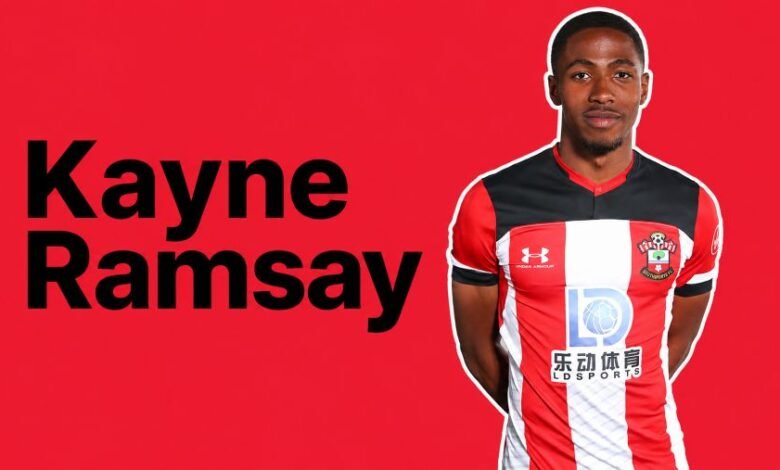
Introduction
Kayne Ramsay is an English professional footballer who plays as a defender for Charlton Athletic. He is mainly a right-back but can also operate as a right-sided centre-back.
Born in Hackney, London, Ramsay developed through the Chelsea and Southampton academies before gaining senior experience with several clubs in England and Scotland.
His career has included Premier League football, challenging loan spells, a permanent move to Harrogate Town and promotion to the Championship with Charlton Athletic.
Quick Profile
| Field | Information |
|---|---|
| Full Name | Kayne Richard Junior Ramsay |
| Date of Birth | 10 October 2000 |
| Age | 25 years old |
| Birthplace | Hackney, London, England |
| Nationality | English |
| Profession | Professional footballer |
| Position | Right-back and centre-back |
| Current Club | Charlton Athletic |
| Squad Number | 2 |
| Preferred Foot | Right |
| Former Clubs | Southampton, Shrewsbury Town, Crewe Alexandra, Ross County and Harrogate Town |
| Major Achievement | Promotion to the Championship with Charlton Athletic |
Who Is Kayne Ramsay?
Kayne Ramsay is a versatile English defender known for his pace, strength and ability to defend in one-against-one situations.
He joined Charlton Athletic from Harrogate Town in February 2024 after producing consistent performances in League Two.
The official Charlton Athletic profile confirms that he started his development with Chelsea before joining Southampton in 2017.
Ramsay has experienced different levels of British football, ranging from the Premier League and Scottish Premiership to League One, League Two and the Championship.
Early Life in Hackney
Ramsay was born on 10 October 2000 in Hackney, East London.
Football became an important part of his childhood, and he entered Chelsea’s academy system at a young age.
Training within an elite academy gave him access to professional coaching, competitive matches and structured physical development.
He later moved from Chelsea to Southampton in 2017. The transfer gave him a clearer opportunity to progress towards senior football.
The academy route followed by Ramsay shares similarities with young defender Maldini Kacurri, who also developed at leading London clubs before entering senior competition.
Southampton Development
Ramsay progressed quickly after joining Southampton.
He impressed for the club’s youth teams and signed his first professional contract in September 2018.
Only three months later, he was selected to start a Premier League match against Manchester City at St Mary’s Stadium.
Ramsay was 18 years and 81 days old when he made the appearance on 30 December 2018.
That selection made him the youngest player to start a Premier League match during the 2018–19 season.
Premier League Opportunity
Facing Manchester City was a major early test for Ramsay.
He was required to defend against experienced international players while still adjusting to senior football.
Although he did not immediately become a regular Southampton starter, the match demonstrated the confidence the coaching staff had in his potential.
The appearance also introduced him to the speed, movement and tactical demands of Premier League football.
Ramsay signed a two-year Southampton contract extension in February 2021, showing that the club remained interested in his long-term development.
Loan Move to Shrewsbury Town
Ramsay joined Shrewsbury Town on loan in January 2020.
The move gave him an opportunity to experience the physical and competitive nature of League One football.
He made five league appearances before the season was interrupted and eventually shortened.
Although the loan was brief, it represented an important step away from academy football and into regular senior competition.
Playing against experienced professionals helped him understand the importance of positioning, concentration and defensive decision-making.
Crewe Alexandra Experience
Crewe Alexandra signed Ramsay on a season-long loan in June 2021.
The move provided another opportunity to play regularly in League One and continue his development as a right-back.
He appeared 19 times across league and cup competitions during his time with Crewe.
In September 2021, Ramsay had to leave a match shortly after kick-off after suffering an allergic reaction.
He recovered and returned to football, showing resilience during a challenging stage of his career.
His development through temporary moves reflects the route followed by goalkeeper Josh Griffiths, who also gained important senior experience through EFL loan spells.
Ross County and First Senior Goal
Ramsay moved to Scottish Premiership club Ross County in January 2022.
Playing in Scotland exposed him to a different football environment and another demanding top-flight competition.
He made nine appearances in all competitions and scored the first senior goal of his career.
The goal came against Livingston and helped Ross County secure an important result.
At the end of the loan, Ross County manager Malky Mackay praised Ramsay’s personality, professionalism and work ethic.
Permanent Move to Harrogate Town
Ramsay left Southampton and joined Harrogate Town permanently in August 2022.
This transfer became one of the most important turning points in his career.
Instead of moving between temporary loan agreements, he gained the stability needed to play regularly and establish himself as a senior professional.
Ramsay made 61 appearances in all competitions for Harrogate Town.
During the first half of the 2023–24 season, he registered five assists and attracted interest from clubs at a higher level.
His progress at Harrogate showed that leaving a Premier League academy can sometimes create a better pathway towards consistent first-team football.
Charlton Athletic Transfer
Charlton Athletic signed Ramsay from Harrogate Town on 1 February 2024.
The transfer fee was not publicly disclosed, while Ramsay agreed a three-and-a-half-year contract.
Charlton viewed him as a strong, quick and athletic defender who could compete effectively in one-against-one situations.
The move also brought Ramsay back to London and closer to his family.
He entered a Charlton squad that was attempting to improve its League One position and build a stronger defensive structure.
First Charlton Goal
Ramsay scored his first goal for Charlton Athletic on 1 March 2025.
Charlton were facing Leyton Orient in an important League One match at The Valley.
Macaulay Gillesphey scored a stoppage-time equaliser before Ramsay headed home another corner in the 97th minute.
The dramatic 2–1 victory moved Charlton into the play-off positions.
It became one of the most memorable individual moments of Ramsay’s senior career.
Promotion to the Championship
Ramsay played an important role during Charlton’s successful 2024–25 League One campaign.
He provided defensive strength on the right side and regularly contributed to a team that became difficult to break down.
During the play-off semi-final against Wycombe Wanderers, Ramsay produced a crucial double block as Charlton protected a narrow aggregate lead.
Charlton progressed to the Wembley final after completing a 1–0 aggregate victory.
Ramsay started the final against Leyton Orient on 25 May 2025.
Macaulay Gillesphey’s free-kick secured a 1–0 victory and returned Charlton Athletic to the Championship after five seasons away.
League One Recognition
Ramsay’s performances during the promotion campaign earned wider recognition.
He was selected in the EFL League One Team of the Season produced through WhoScored statistical ratings.
His strong tackling, aerial ability, ball carrying and defensive consistency contributed to his selection.
Ramsay was also included in statistically selected play-off teams after helping Charlton record important clean sheets.
The recognition highlighted his development from a League Two defender into an influential player for a promotion-winning League One side.
Playing Style
Ramsay is naturally suited to the right side of defence.
His speed allows him to recover when opponents attack behind the defensive line.
He also uses his physical strength to compete in direct challenges and protect the ball under pressure.
Charlton can use him as a traditional right-back, a wing-back or the right-sided defender in a back three.
His versatility has become increasingly valuable as football teams change formations during matches.
Like Swedish full-back Gabriel Gudmundsson, Ramsay can adjust between wider and more defensive positions depending on the tactical system.
Defensive Strengths
One-against-one defending is one of Ramsay’s strongest qualities.
He stays close to opposing attackers and attempts to prevent them from turning towards goal.
His pace also allows him to cover spaces behind teammates when Charlton push higher up the pitch.
Ramsay is willing to block shots and crosses, qualities that became particularly important during Charlton’s promotion play-offs.
He can also carry the ball forward and support attacks when space becomes available on the right wing.
The defensive discipline required for his position can also be seen in players such as Raúl Asencio, although Ramsay has developed mainly through the English Football League.
Injuries and Career Challenges
Ramsay suffered a knee injury during a match against Stockport County in October 2024.
The injury kept him away from Charlton’s first team for approximately three months.
He returned to the matchday squad against Shrewsbury Town in January 2025.
Recovering from the injury was important because Charlton were approaching the decisive part of their promotion campaign.
Ramsay regained his fitness and later contributed during the play-off semi-final and final.
His response demonstrated the determination needed to recover from setbacks and compete for a place in a successful team.
Championship Career
Charlton returned to the Championship for the 2025–26 season.
The higher division presented Ramsay with faster attacks, stronger opponents and greater tactical pressure.
He became one of the players shortlisted for Charlton’s August 2025 Player of the Month award.
Ramsay continued to play as a right-sided defender while gaining experience against established Championship teams.
He publicly emphasised the importance of excitement, confidence and understanding individual roles within Charlton’s tactical system.
Current Charlton Status
Charlton’s 2025–26 end-of-season squad update confirmed that Ramsay remained under contract with the club.
He was included among the first-team players retained for the 2026–27 campaign.
Charlton’s first-team list also continues to place Ramsay among the club’s senior defenders.
His original contract is expected to run until the summer of 2027.
The next stage of his career will involve maintaining fitness, competing for regular Championship minutes and helping Charlton progress.
Public Image and Work Ethic
Ramsay has developed a professional public image centred on football.
Former coaches have praised his attitude, personality and willingness to work.
His interviews generally focus on team performance, defensive concentration and continuous improvement.
Ramsay has also spoken positively about Charlton Athletic and the support provided by the club’s fans.
His journey shows that a player can rebuild momentum through loan moves and lower-league football after receiving limited opportunities at a Premier League club.
A similar level of persistence can be found in the career of Josh Neufville, who also used different EFL experiences to strengthen his professional career.
Career Timeline
| Year | Career Event |
|---|---|
| 2000 | Born in Hackney, London |
| Youth Career | Joined Chelsea’s academy |
| 2017 | Moved to Southampton |
| September 2018 | Signed his first professional contract |
| December 2018 | Made his Premier League debut against Manchester City |
| January 2020 | Joined Shrewsbury Town on loan |
| June 2021 | Joined Crewe Alexandra on loan |
| January 2022 | Moved to Ross County on loan |
| August 2022 | Signed permanently for Harrogate Town |
| February 2024 | Joined Charlton Athletic |
| March 2025 | Scored his first Charlton goal |
| May 2025 | Won promotion to the Championship |
| May 2026 | Confirmed as remaining under contract |
Major Achievements
- Youngest Premier League starter during the 2018–19 season.
- Scored his first senior goal for Ross County.
- Made 61 appearances for Harrogate Town.
- Scored a 97th-minute winning goal for Charlton.
- Helped Charlton reach the 2025 League One play-off final.
- Won promotion to the Championship at Wembley.
- Selected in a statistically rated League One Team of the Season.
- Established himself as a versatile Championship defender.
Interesting Facts
- Ramsay was born in Hackney, London.
- He developed at both Chelsea and Southampton.
- His Premier League debut came against Manchester City.
- He was only 18 when he made his first Premier League start.
- His first senior goal came in Scotland.
- Harrogate Town gave him his first stable run of regular senior football.
- He returned to London after joining Charlton Athletic.
- His first Charlton goal was scored in the 97th minute.
- He can play as a right-back or centre-back.
- He helped Charlton win promotion at Wembley in 2025.
Conclusion
Kayne Ramsay has created a strong professional career through patience, determination and regular improvement.
His early years with Chelsea and Southampton gave him an elite football education, but loan spells allowed him to understand the realities of senior competition.
A permanent move to Harrogate Town provided the stability he needed, while his performances earned him a transfer to Charlton Athletic.
His promotion success, dramatic first goal and important play-off contributions have made him a respected member of the Charlton squad.
At 25 years old, Ramsay still has time to improve and establish himself as a consistent Championship defender.
Frequently Asked Questions
Who is Kayne Ramsay?
He is an English professional footballer who plays as a defender for Charlton Athletic.
How old is Kayne Ramsay?
He is 25 years old as of July 2026.
When was Kayne Ramsay born?
He was born on 10 October 2000.
Where was Kayne Ramsay born?
He was born in Hackney, London, England.
What position does Kayne Ramsay play?
He mainly plays as a right-back but can also perform as a centre-back.
Which club does Kayne Ramsay play for?
He plays for Charlton Athletic.
What squad number does Kayne Ramsay wear?
He has worn number 2 for Charlton Athletic.
When did Kayne Ramsay make his Premier League debut?
He made his debut against Manchester City on 30 December 2018.
Which academies did Kayne Ramsay join?
He developed through the Chelsea and Southampton academies.
What is Kayne Ramsay’s biggest achievement?
He helped Charlton Athletic win the 2025 League One play-off final and promotion to the Championship.