Who Is Sameer Minhas? His Family and Cricket Journey
The young Pakistani opening batter who broke a Youth ODI record and became Islamabad United’s leading scorer in his first HBL PSL season

Introduction
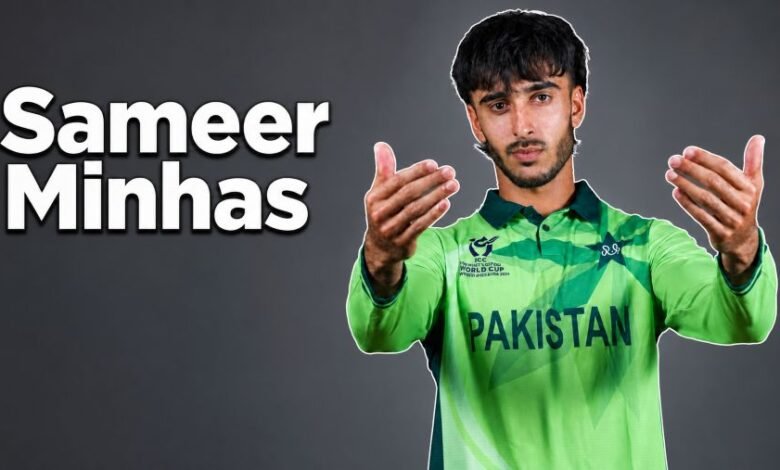
Sameer Minhas is a Pakistani cricketer from Multan known for aggressive opening batting. He became famous after scoring 172 against India in the 2025 ACC Men’s Under-19 Asia Cup final. He later made the fastest Youth ODI century at the time, reaching 100 in only 42 balls.
Sameer has represented Pakistan Under-19s, Pakistan Shaheens and Islamabad United. He is also the younger brother of Pakistan international cricketer Arafat Minhas. During HBL PSL 11, Sameer scored 349 runs and finished as Islamabad United’s leading run-scorer.
Quick Bio
| Detail | Confirmed information |
|---|---|
| Full name | Sameer Minhas |
| Date of birth | 2 October 2006 |
| Age | 19 as of July 2026 |
| Birthplace | Multan, Punjab, Pakistan |
| Nationality | Pakistani |
| Profession | Professional cricketer |
| Playing role | Opening batter |
| Batting style | Right-handed |
| Bowling style | Right-arm leg-break spin |
| Father | Kashif Minhas |
| Mother | Uzma Minhas |
| Older brother | Arafat Minhas |
| Younger brother | Abdullah Minhas |
| Major teams | Pakistan Under-19s, Pakistan Shaheens and Islamabad United |
| Famous innings | 172 against India Under-19s |
| Major record | 42-ball Youth ODI century |
| HBL PSL 11 runs | 349 |
Sameer Minhas’ Age and Date of Birth
Sameer Minhas was born on 2 October 2006 in Multan, Punjab. He is 19 years old as of July 2026 and will turn 20 in October 2026.
The official Pakistan Cricket Board profile confirms his birthplace, date of birth and playing style.
Sameer is a right-handed batter who can also bowl right-arm leg-break spin. His main role is opening the batting and scoring runs quickly.
Early Life in Multan
Sameer grew up in a family with a strong love for cricket. His earliest matches were not played in a large stadium or professional academy. He and his older brother, Arafat Minhas, began by playing on the tiled floor of their home.
The brothers used taped tennis balls and sometimes sprinkled water on the tiles. This made the ball move faster and helped them learn how to react to difficult deliveries.
Their father later encouraged them to move from plastic bats and tennis balls to organised leather-ball cricket. Arafat started structured training first, and Sameer followed him.
This simple beginning became the foundation of two professional cricket careers.
Who Is Sameer Minhas’ Father?
Sameer’s father is Kashif Minhas, a former Multan Under-19 cricketer.
Kashif wanted to build his own cricket career, but family circumstances prevented him from continuing. When he recognised cricketing talent in Arafat and Sameer, he decided to help them follow the path he had been unable to complete.
He hired a Level 2 coach, took the boys to cricket academies and paid attention to their nutrition and physical development.
During the COVID-19 lockdown, Kashif built practice pitches on the family’s rooftop. He also installed nets and lights so his sons could continue training when normal cricket grounds were closed.
Kashif is also known for wildlife and cricket photography. His experience as a former player helped him understand the discipline needed to develop young cricketers.
Who Is Sameer Minhas’ Mother?
Sameer’s mother is Uzma Minhas.
Kashif has publicly credited her with playing an important role in the family’s cricket journey. She travelled with the family to training sessions and matches, including events held far from their home.
Her support allowed the brothers to follow a demanding practice and competition schedule.
The family support behind professional cricket can often remain hidden from the public. Readers interested in another Pakistani cricket family can explore Shaniera Akram’s family life and work.
Sameer Minhas and Arafat Minhas
Arafat Minhas is Sameer’s older brother and a Pakistan international cricketer.
The brothers have different playing roles. Sameer is mainly a right-handed opening batter, while Arafat is a left-handed batter and left-arm spin bowler.
Arafat reached Pakistan’s senior team first, making his T20 international debut in 2023. His progress gave Sameer a close example of the work required to reach international cricket.
Sameer has said that watching Arafat practise and compete strengthened his motivation. The brothers spent years training together before appearing for different teams during HBL PSL 11.
Sameer represented Islamabad United, while Arafat played for Multan Sultans. In one memorable match, Arafat caught Sameer near the boundary.
Their younger brother, Abdullah Minhas, is also involved in age-group cricket.
Cricket careers can affect an entire family, especially when players spend long periods travelling. This side of the game is also explored through Clare Ratcliffe and Ben Stokes’ cricket family.
Start of Sameer Minhas’ Cricket Career
Sameer began organised cricket with Multan Region at Under-13 level during the 2018–19 season.
He later captained Southern Punjab Under-13s and helped the team reach a final. At Under-16 level, he represented Southern Punjab in the PCB National Under-16 One-Day Tournament during the 2020–21 season.
His performances earned him selection for the PCB’s 100-player development programme.
Sameer did not enjoy immediate success after moving into Under-19 cricket. His first season produced modest results, but he continued working on his batting technique.
His improvement became clear when he scored more than 400 runs from seven matches in the National Under-19 Cup. Those performances helped him earn a place in the Pakistan Under-19 squad.
The route from youth cricket to senior competition requires patience. Keaton Jennings’ professional cricket career provides another example of how age-group experience can prepare a batter for higher levels.
Under-19 Asia Cup Breakthrough
Sameer produced the most important innings of his young career on 21 December 2025.
Pakistan faced India in the ACC Men’s Under-19 Asia Cup final in Dubai. Opening the batting, Sameer scored 172 runs from 113 balls.
His innings included:
- 17 fours
- Nine sixes
- A strike rate above 152
- Important partnerships with Usman Khan and Ahmed Hussain
Pakistan finished with 347 for eight from 50 overs. India were dismissed for 156, giving Pakistan a 191-run victory.
The result delivered Pakistan’s first outright Under-19 Asia Cup title. Pakistan and India had previously shared the trophy in 2012.
Sameer received the Player of the Match award for his 172. He was also named Player of the Tournament after scoring 471 runs from five matches at an average of 157.
The innings attracted attention from cricket supporters across different countries. Digital cricket publications have become important for following emerging players, as shown by the history of the Cricfooty cricket platform.
Record-Breaking 42-Ball Century
Sameer created another major record on 6 January 2026.
Pakistan faced Zimbabwe in the final of an Under-19 tri-series in Harare. Zimbabwe were dismissed for 158, giving Pakistan a small target.
Sameer attacked the bowling and completed his century in only 42 deliveries. He finished with 114 runs from 51 balls, including 17 fours and five sixes.
Pakistan reached the target in 16.2 overs and won by nine wickets.
Sameer’s 42-ball hundred was the fastest century recorded in Youth ODI cricket at that time. It passed the previous 52-ball record set by Indian batter Vaibhav Sooryavanshi against England in 2025.
Sameer was named Player of the Tournament as Pakistan secured its second youth title within a short period.
ICC Under-19 World Cup Performance
Sameer represented Pakistan at the 2026 ICC Men’s Under-19 Cricket World Cup in Zimbabwe and Namibia.
He finished as Pakistan’s leading run-scorer in the competition.
| Statistic | Record |
|---|---|
| Matches | 5 |
| Innings | 5 |
| Not outs | 2 |
| Runs | 197 |
| Highest score | 76 not out |
| Batting average | 65.67 |
| Strike rate | 105.35 |
| Half-centuries | 2 |
| Fours | 22 |
| Sixes | 5 |
Sameer scored an unbeaten 74 against Zimbabwe, helping Pakistan qualify for the Super Six stage.
He then made 76 not out from 59 deliveries against New Zealand. His innings contained ten fours and two sixes as Pakistan completed an eight-wicket victory.
Pakistan did not win the competition, but Sameer’s consistent performances proved that his Asia Cup success was not based on one innings.
Pakistan Shaheens Career
Sameer was selected for the Pakistan Shaheens’ white-ball series against England Lions in February 2026.
Pakistan Shaheens serve as the country’s senior development team. Selection gives emerging players the opportunity to face experienced opponents and move closer to the national side.
Sameer appeared in the third T20 on 24 February 2026 and scored ten runs. He also played in the first 50-over match on 27 February, scoring 11.
The selection represented an important step from youth cricket into the senior professional pathway.
Islamabad United and HBL PSL 11
Islamabad United acquired Sameer for PKR 1.9 crore during the first HBL PSL player auction in February 2026.
He entered the tournament with a strong Under-19 record but limited senior experience. Despite this challenge, he quickly became one of Islamabad’s most productive batters.
Unbeaten 82 Against Quetta Gladiators
Sameer scored 82 not out from 48 deliveries against Quetta Gladiators.
His innings contained eight fours and three sixes. He shared an unbeaten 128-run partnership with Shadab Khan as Islamabad successfully chased 184.
It was Sameer’s first HBL PSL half-century.
Fast 70 Against Rawalpindiz
Sameer followed his unbeaten 82 with 70 from only 36 balls against Rawalpindiz.
He hit seven fours and four sixes and completed his half-century in 25 deliveries. Islamabad won the match with 34 balls remaining.
Player of the Match Against Karachi Kings
Sameer scored 58 from 36 balls against Karachi Kings, hitting ten fours.
He shared a 93-run opening partnership with Devon Conway and received the Player of the Match award.
Knockout Innings Against Peshawar Zalmi
Sameer scored 44 from 23 deliveries against Peshawar Zalmi in the HBL PSL qualifier.
Islamabad were chasing 222 and eventually lost the match, but Sameer’s attacking innings showed that he could perform under knockout pressure.
Sameer Minhas’ HBL PSL 11 Statistics
Sameer finished HBL PSL 11 with 349 runs at a strike rate of 155.80.
He was Islamabad United’s leading run-scorer and was selected in the competition’s Emerging Team of the Tournament. The official HBL PSL announcement placed him first in the emerging team’s batting order.
The achievement was particularly impressive because it was Sameer’s first season in the tournament.
Sameer Minhas’ Batting Style
Sameer is an attacking right-handed opening batter.
His main batting qualities include:
- Quick scoring during the powerplay
- Strong timing
- Confident front-foot shots
- Finding gaps in the field
- Boundary-hitting against pace and spin
- Increasing his scoring rate after settling at the crease
He does not depend only on physical power. Timing, placement and confidence are important parts of his game.
Sameer has named former South African batter AB de Villiers as an inspiration. He admires De Villiers’ fearless approach and ability to score in different areas of the field.
Work Ethic and Match Preparation
Sameer’s progress has come through regular practice and attention to basic technique.
Before matches, he watches highlights of his successful innings. This helps him remember positive moments and prepare with greater confidence.
He has also spoken about the importance of unity within a cricket team. After Pakistan won the Asia Cup and the Zimbabwe tri-series, Sameer credited the strong relationship between the players.
Family support is another major part of his development. Stories such as Rachel McLellan and Usman Khawaja’s family journey also show how cricket careers often involve support and sacrifice away from the field.
Why Is Sameer Minhas Famous?
Sameer Minhas is famous for five main achievements:
- Scoring 172 against India in the 2025 Under-19 Asia Cup final.
- Winning the Asia Cup Player of the Tournament award.
- Completing a Youth ODI century in 42 balls.
- Finishing as Pakistan’s leading scorer at the 2026 Under-19 World Cup.
- Becoming Islamabad United’s leading run-scorer in HBL PSL 11.
These performances made him one of Pakistan’s most closely watched young opening batters.
Frequently Asked Questions
Who is Sameer Minhas?
Sameer Minhas is a Pakistani professional cricketer from Multan. He is a right-handed opening batter who has represented Pakistan Under-19s, Pakistan Shaheens and Islamabad United.
How old is Sameer Minhas?
Sameer Minhas is 19 years old as of July 2026.
When was Sameer Minhas born?
He was born on 2 October 2006.
Where was Sameer Minhas born?
He was born in Multan, Punjab, Pakistan.
Who is Sameer Minhas’ father?
His father is Kashif Minhas, a former Multan Under-19 cricketer and photographer.
Who is Sameer Minhas’ mother?
His mother is Uzma Minhas, who supported the brothers throughout their cricket development.
Is Arafat Minhas related to Sameer Minhas?
Yes. Arafat Minhas is Sameer’s older brother and a Pakistan international cricketer.
What is Sameer Minhas’ batting style?
Sameer is a right-handed opening batter. He can also bowl right-arm leg-break spin.
What is Sameer Minhas’ most famous score?
His most famous score is 172 from 113 balls against India in the 2025 Under-19 Asia Cup final.
What record did Sameer Minhas break?
He completed a Youth ODI century in 42 balls against Zimbabwe in January 2026. It was the fastest century in the format at that time.
Which HBL PSL team does Sameer Minhas play for?
Sameer represented Islamabad United during HBL PSL 11.
How many runs did Sameer Minhas score in HBL PSL 11?
He scored 349 runs at a strike rate of 155.80 and finished as Islamabad United’s leading run-scorer.
Final Thoughts
Sameer Minhas has progressed from playing cricket on the tiled floor of his home to producing match-winning performances in international youth tournaments and the HBL PSL.
His 172 against India introduced him to a worldwide cricket audience. His 42-ball century demonstrated his attacking talent, while his 349-run HBL PSL season proved that he could also perform against senior professional bowlers.
Sameer remains at an early stage of his career. Continued performances for domestic teams, Pakistan Shaheens and Islamabad United could move him closer to a regular place at the highest level.
His story already shows how talent, family support, structured coaching and daily discipline can turn a childhood interest into a professional cricket career.