Malick Fofana: Explosive Rise of Belgium’s Exciting Lyon Winger
From Belgian youth football to Gent, Olympique Lyonnais and the national team, the young attacker has built a reputation through speed, direct football and European goals.

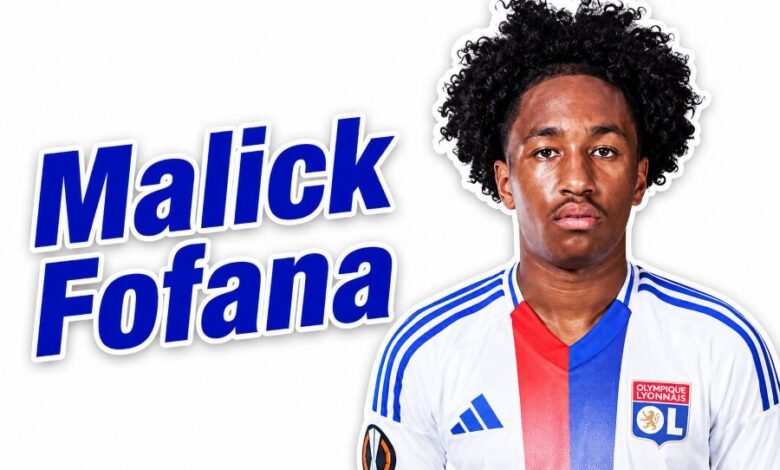
Introduction
Malick Fofana is a Belgian professional footballer who plays for Olympique Lyonnais in France and represents the Belgium national team. He is best known for his speed, dribbling, attacking movement and ability to create danger from wide positions.
Born on 31 March 2005 in Aalst, Belgium, the young winger developed through Belgian football before making his senior breakthrough with KAA Gent. His performances earned him a move to Lyon in January 2024, where his career reached another level.
At only 21 years old as of August 2026, he has already played in the Belgian Pro League, Ligue 1, European competitions and senior international football.
Quick Facts
| Detail | Information |
|---|---|
| Full name | Malick Martin Fofana |
| Known as | Malick Fofana |
| Date of birth | 31 March 2005 |
| Age | 21 years old, as of August 2026 |
| Birthplace | Aalst, Belgium |
| Nationality | Belgian |
| Profession | Professional footballer |
| Position | Left winger / forward |
| Height | About 1.69 m |
| Current club | Olympique Lyonnais |
| Club number | 11 |
| National team | Belgium |
| Senior international debut | 10 October 2024 |
| Former senior club | KAA Gent |
His current Lyon status, Belgian nationality, date of birth and No. 11 shirt are also listed on his official UEFA player profile.
Who Is Malick Fofana?
He is one of Belgium’s talented young attacking footballers.
The winger combines quick acceleration with close control and confidence when running directly toward defenders. These qualities helped him progress from youth football in Belgium to one of France’s most famous clubs while still a teenager.
His development has also attracted attention because he reached several important career stages at a young age.
He became a professional at Gent, played European football, moved to Lyon at 18 and later earned a place in Belgium’s senior national team.
For readers interested in other rising football careers, our Promise David biography follows another attacker’s journey through Belgian football.
Early Life and Background
The footballer was born in Aalst, a city in Belgium, on 31 March 2005.
Football became part of his life from childhood.
He first played organised football at a young age before spending time with Eendracht Aalst and eventually entering KAA Gent’s youth system.
Gent became an important part of his development. The academy provided the training and competitive environment needed to prepare him for senior professional football.
Ligue 1 has reported that he is of Guinean and Filipino descent and that his father was also a professional footballer. The player has spoken publicly about growing up in Belgium and feeling strongly connected to the country where he spent his childhood.
Youth Career at KAA Gent
Joining Gent was one of the biggest early steps in his career.
He spent years developing through the academy before earning professional opportunities.
The transition from youth football to senior competition is difficult for any player. Young attackers must become faster in their decisions, stronger physically and more consistent when playing against experienced professionals.
His talent was strong enough for Gent to move him toward first-team football while he was still a teenager.
He signed his first professional contract before eventually becoming part of the senior squad.
Professional Debut and Gent Career
The Belgian winger made his senior league breakthrough with KAA Gent during the 2022–23 season.
His early appearances gave him experience in Belgium’s top division and introduced him to professional football at a high level.
He was not simply limited to domestic matches.
Gent also competed in European football, giving the young attacker valuable experience against clubs from outside Belgium.
His pace and confidence in wide attacking areas made him an interesting prospect.
By the time he left Gent, major clubs had started recognising his potential.
Move to Olympique Lyonnais
A major career change came in January 2024 when Olympique Lyonnais signed him from Gent.
He was only 18.
Moving from Belgium to Ligue 1 represented a major jump in pressure, expectations and competition.
Lyon are one of France’s best-known football clubs and have a long history of developing talented young players.
The transfer therefore gave the youngster both an opportunity and a challenge.
He had to adapt to a new league, a different country and stronger competition while continuing his development.
His contract is currently listed through June 2028, while Transfermarkt continues to list Lyon as his club as of the 2026–27 period.
Growing at Lyon
The first months in France gave him time to understand his new environment.
He appeared in Ligue 1 during the second half of the 2023–24 season and started showing the qualities that had made Lyon interested in him.
Speed became one of his most noticeable strengths.
He could receive the ball near the touchline, accelerate quickly and force defenders to move backward.
His ability to play on either side of the attack also gave coaches different options.
Lyon eventually became the club where his reputation started growing far beyond Belgium.
For another football story connected closely with Lyon, read our profile of Amandine Henry, one of the most successful footballers associated with the French club.
Breakthrough in the 2024–25 Europa League
European competition played an important role in his rise.
The 2024–25 UEFA Europa League became one of the strongest periods of his young career.
He finished the competition with six goals.
That placed him only one goal behind the three joint leading scorers, who finished on seven.
UEFA’s final scoring table placed the Lyon attacker alongside several major European names on six goals.
It was an important achievement because he was still only 20 when the competition ended.
His performances showed that his attacking ability could be effective not only in French football but also against European opposition.
Memorable Rangers Performance
One of his standout European performances came against Rangers.
The winger played a major role as Lyon won 4–1 in Glasgow during the Europa League campaign.
His ability to attack space, move quickly with the ball and take opportunities in front of goal helped make the match an important moment in his growing reputation.
Performances like this helped change the way many football followers viewed him.
He was no longer simply a promising academy graduate.
He was beginning to look like a player capable of influencing important European matches.
Playing Style
The Belgian international is mainly used as a left winger, although he can operate in other attacking positions.
His game is built around movement and speed.
Pace
Acceleration is one of his biggest weapons.
UEFA recorded a top speed of 34.06 km/h in its European Qualifiers statistics.
This allows him to create separation from defenders and attack open space.
Dribbling
He is comfortable carrying the ball directly toward opponents.
Instead of always choosing a safe pass, he often tries to move forward and create attacking pressure.
Wide Attacking Play
Playing from the left allows him to receive the ball in space before moving toward the penalty area.
He can also operate from the opposite side when needed.
Direct Football
His style is generally aggressive in an attacking sense.
He wants to move the ball toward goal rather than simply keeping possession.
That direct approach is one reason he can be dangerous when introduced against tired defenders.
Belgium National Team Career
Progress at club level eventually led to international recognition.
He represented Belgium at youth levels before receiving an opportunity with the senior national team.
His senior debut came against Italy on 10 October 2024 in the UEFA Nations League.
Belgium drew the match 2–2 in Rome, and the young attacker entered from the bench. UEFA’s official match report lists him among Belgium’s substitutes for the game.
Reaching the senior team was another major step.
Belgium has produced many high-level attacking players, so earning an international place at a young age showed how quickly his reputation had developed.
He later scored his first senior international goal and, as of the latest available player records, has five Belgium caps and one goal.
Malick Fofana Injury
His rise has not been completely smooth.
A serious right ankle injury suffered against Strasbourg in October 2025 interrupted his 2025–26 season.
The problem kept him away from regular football for several months.
Recovery was gradual, and Lyon had to manage his return carefully.
By March 2026, he had started returning to the matchday picture. Ligue 1 reported that he was fit enough to be on Lyon’s bench against Celta Vigo in the Europa League Round of 16.
The injury remained an important part of his season because it reduced his playing time during a period when he might otherwise have continued building momentum.
Return to Action in 2026
There was positive news during the summer.
On 24 July 2026, he returned to action for Lyon during a preseason match against Wolfsburg.
Lyon won the friendly 2–0, and reports noted that the winger was involved in the move for the second goal.
The appearance was particularly important because ankle problems had affected him for many months.
His return suggested that he was moving closer to full competitive football ahead of the new season.
Current Club and Status
As of August 2026, he remains an Olympique Lyonnais player.
UEFA’s current Lyon squad lists him among the club’s forwards, while his individual UEFA profile shows him wearing No. 11.
Lyon’s current attacking group contains several young players, and Ligue 1 described the Belgian as the oldest recognised forward among a particularly youthful selection during the early stages of the 2026 preseason.
At 21, he is still at an age where development can continue significantly.
Transfer Value and Transfer Interest
Young attacking players with pace and European experience naturally attract transfer discussion.
His performances have led to reports linking him with clubs outside France.
However, transfer rumours should not be confused with confirmed transfers.
As of August 2026, the verified position remains simple: he is a Lyon player.
Transfermarkt listed his estimated market value at €30 million as of 1 June 2026.
A market value is only an estimate of a player’s possible transfer value. It is not the same thing as salary, personal wealth or net worth.
Why Is He Considered a Promising Player?
Several factors explain the interest surrounding him.
- He reached senior professional football as a teenager.
- He moved to Lyon at only 18.
- He has played in both the Belgian and French top divisions.
- He has senior international experience with Belgium.
- He scored six goals in one Europa League campaign.
- Pace and dribbling make him difficult to defend in open space.
- At 21, he still has considerable room for development.
The next important step is consistency.
Young players can produce exciting individual performances, but becoming an established top-level footballer requires staying fit and performing over complete seasons.
His recovery from the ankle injury will therefore be important to the next stage of his career.
Career Timeline
| Year | Career Event |
|---|---|
| 2005 | Born in Aalst, Belgium |
| Childhood | Began playing organised football |
| Youth career | Developed with Eendracht Aalst and KAA Gent |
| 2022 | Entered Gent senior football |
| 2022–2024 | Played professionally for KAA Gent |
| January 2024 | Joined Olympique Lyonnais |
| 2024 | Reached the Coupe de France final with Lyon |
| October 2024 | Made Belgium senior debut |
| 2024–25 | Scored six Europa League goals |
| 2025 | Scored first senior Belgium goal |
| October 2025 | Suffered serious right ankle injury |
| 2026 | Returned gradually after rehabilitation |
| July 2026 | Played again for Lyon in preseason |
Frequently Asked Questions
How old is Malick Fofana?
He was born on 31 March 2005, making him 21 years old as of August 2026.
Where was Malick Fofana born?
He was born in Aalst, Belgium.
What is Malick Fofana’s nationality?
He is Belgian and represents Belgium internationally.
What position does Malick Fofana play?
He mainly plays as a left winger but can also operate in other wide attacking positions.
What club does Malick Fofana play for?
As of August 2026, he plays for Olympique Lyonnais, commonly called Lyon, in France.
What number does Malick Fofana wear?
UEFA currently lists him as No. 11 for Lyon.
How tall is Malick Fofana?
His listed height is approximately 1.69 metres, or around 5 feet 7 inches.
Did Malick Fofana play for Gent?
Yes. He developed at KAA Gent and played for their senior team before joining Lyon in January 2024.
Does Malick Fofana play for Belgium?
Yes. He made his senior Belgium debut in October 2024 after previously representing the country at youth level.
How many Europa League goals did he score in 2024–25?
He scored six goals in the 2024–25 UEFA Europa League, finishing only one behind the competition’s three joint leading scorers.
What injury did Malick Fofana suffer?
He suffered a serious right ankle injury in October 2025. The problem kept him out for several months before he gradually returned to football in 2026.
Final Words
Malick Fofana’s football journey shows how quickly a talented young player can move from academy football to major European competition.
Starting in Belgium, developing at Gent and joining Lyon before turning 19 created a strong foundation for his professional career.
His six-goal Europa League campaign and Belgium debut showed his attacking potential, while the serious ankle injury became the biggest challenge of his career so far.
The encouraging part is that he returned to the pitch in 2026.
At 21 years old, his story is still developing. Fitness, regular playing time and consistency will determine how far the talented winger can go during the next stage of his career.