High-Level Window Cleaning Solutions for London Offices and Commercial Properties

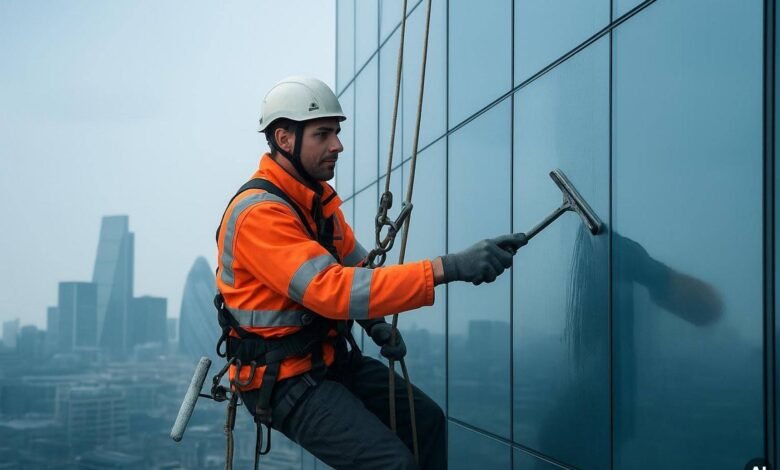
Looking after the outside of a commercial building in London means keeping a professional appearance while meeting strict safety requirements. High-level window cleaning meets both needs by using trained technicians, tested access systems, and pure water equipment to clean glass at any height without interrupting the work below. From the glass towers of Canary Wharf and the City of London to managed buildings in Mayfair and business centres across the South East, clear windows are a basic part of good property management.
When choosing professional services for high-rise window cleaning in London, facilities managers need to look beyond regular cleaning services. Cleaning the outside of a multi-storey building calls for specialist access methods, including industrial rope access, building maintenance units (BMUs), and telescopic carbon-fibre poles. These methods deal with heavy city dirt while meeting the UK’s strict safety laws.
High-Level Window Cleaning Solutions for London Offices and Commercial Properties
High-level window cleaning means specialist work on commercial buildings where normal squeegees and ladders from the ground cannot reach safely. In London’s crowded urban areas, this includes low- and mid-rise office blocks as well as skyscrapers over 100 metres tall with large curtain-wall facades. Consistent results at these heights require skilled workers, specialist equipment, and a good understanding of how different building materials react to cleaning products.
Commercial property teams do not treat outside glass as a simple decorative surface. They see it as part of the building’s working structure. Before work starts, specialist contractors check the building height, roof anchor load limits, nearby public paths, and local weather conditions. This planning helps restore clear glass while protecting workers, tenants, and people walking below.
What High-Level Commercial Window Cleaning Includes
A full commercial cleaning service involves much more than washing glass with water. The work starts with a close check of the complete window system. This may include outside curtain walling, structural silicone joints, spandrel panels, and composite cladding. Technicians remove rough particles, built-up city soot, and airborne grease from the glass and frame sections.
Along with ordinary window washing, high-quality services can cover indoor atrium glass, glazed balustrades, skylights, and double-skin facade spaces where heat and dust can build up. Workers may also clean decorative louvres, window recesses, and drainage channels. Cleaning these nearby parts helps stop dirty water from running across freshly washed glass during wet weather.
Why London Buildings Require Specialist Window Cleaning
London’s local weather and air quality create difficult conditions for glass facades. Heavy traffic produces diesel soot, fine particles such as PM2.5 and PM10, and nitrogen oxides that stick to glass. Mixed with regular rain, these pollutants create a greasy traffic film that rain alone cannot remove. Sunlight can then dry the film onto the outside of the building.
London’s mains water is also hard, with about 250 to 300 mg/L of dissolved calcium carbonate. Water from sprinklers, window spray, or untreated cleaning runs can dry on warm facades and leave hard limescale marks. Over time, these marks may damage the surface of untreated glass. Specialist filtration, rope access, and mechanical equipment are needed to deal with these conditions safely and effectively.
The Benefits of Professional High-Level Window Cleaning
Professional high-level cleaning offers benefits beyond a better-looking building. A clean outside surface supports the company’s image, lets more daylight into the building, and helps protect the property’s value. Many commercial property owners now see facade care as part of tenant retention and good workplace management.
Regular cleaning can also reduce long-term repair costs. Dirty glass and aluminium frames can break down faster when exposed to London’s acidic air pollution. If cleaning is left too long, a routine service may become an expensive facade repair or window replacement project.
Improves Building Appearance and Corporate Image
A building’s exterior is one of the first parts of a company that clients, investors, and potential tenants see. Bright, streak-free windows give an impression of care, order, and financial stability. Dirty glass, water marks, and stained window frames can suggest poor maintenance before visitors enter the building.
Clean windows also make a clear difference inside. A larger amount of clean glass allows more daylight to reach open-plan offices. Research links natural daylight with less eye strain, fewer tension headaches, and better daily productivity. At a time when office owners are trying to attract staff back from home working, a bright and pleasant workplace can help make the building more appealing.
Protects Glass, Frames, and Facade Materials
Glass may look hard and completely sealed, but it can suffer chemical damage. Air pollution, carbon deposits, and sulphur compounds become mildly acidic when mixed with moisture. These substances can slowly remove minerals from glass, leading to tiny pits or a cloudy, rainbow-like finish. Once this damage has taken place, ordinary cleaning cannot bring back full clarity.
Regular maintenance removes these deposits before they bond permanently to the surface. Cleaning teams also clear grit and organic material from rubber gaskets, silicone seals, and powder-coated frames. Removing this debris limits water entry, helps protect the seals inside insulated glass units (IGUs), and can add years to the working life of curtain wall parts.
Safe Access Methods for High-Level Commercial Windows
Every commercial building has its own shape and access problems. Some have traditional listed facades, while others have cantilevered towers, sharp setbacks, or large atriums. High-level window cleaning needs a range of access methods to suit these differences. The chosen system must account for worker safety, the building design, people at ground level, and the available budget.
Good industry practice follows a clear order of risk control. Ground-based systems are used where they can reach the glass safely. If they cannot, contractors may use lifting platforms, permanent suspended cradles, or industrial rope access.
Rope Access Window Cleaning for Difficult-to-Reach Areas
For tall office towers, landmarks, and buildings with difficult shapes, industrial rope access, often called abseiling, is a highly effective option. Based on climbing and caving methods, the system uses two specialist ropes to give technicians a wide range of movement. Workers can reach overhangs, recessed lightwells, and glass canopies that fixed machines may not be able to reach.
Rope access also keeps the ground area clear. Unlike large cranes or scaffolding, the ropes are set up from the roof, so pavements, bus lanes, and office entrances below remain open. Setting up and removing the system can take minutes rather than days. This reduces site preparation costs and causes less disruption to nearby businesses. Providers such as ropeaccessinlondon.co.uk use this approach to carry out work on busy city-centre buildings with minimal impact on the street below.
Water-Fed Pole Systems for Low- and Mid-Level Windows
For low- and mid-rise offices, schools, and retail buildings of up to six or seven storeys, or around 21 metres or 70 feet, telescopic water-fed poles are a practical choice. These light poles are often made from strong carbon fibre and carry purified water to the glass through small jets and soft brushes.
The main benefit is that workers stay on the ground during the whole cleaning process. This removes the need to work at height. The brush loosens traffic soot and organic dirt, while the steady flow of pure water rinses it away. No detergent is needed, so the glass dries without a soapy layer that could attract more dust.
Health, Safety, and Legal Compliance at Height
Work at height is a leading cause of fatal and serious injuries in the UK. This makes safety compliance a central part of high-level cleaning. Facilities managers with a duty of care should not use informal or poorly trained contractors. A strong health, safety, and environmental management system protects workers, reduces legal risk for building owners, and helps protect the property during every stage of the job.
Commercial cleaning in London must follow a range of British and European health and safety rules. Proof of compliance includes trained staff, regular equipment checks, written procedures, and proper site control before anyone climbs or descends the building.
Site Surveys, Risk Assessments, and Method Statements
Before work begins, a competent contractor carries out a detailed site survey. The survey checks the condition of roof anchors, the load limits of the facade, nearby electrical systems, the number of pedestrians around the building, and wind effects caused by London’s tall buildings. Weather limits, including maximum wind speeds, are set so work can stop safely when conditions change.
The survey results are used to prepare Risk Assessments and Method Statements, known as RAMS. These documents describe each work stage, the personal protective equipment (PPE) needed, the ways hazards will be controlled, and the location of exclusion zones. A high-level cleaning team should not start work without a site-specific RAMS document approved by the facilities manager. This gives everyone a clear record of their duties.
Work at Height Regulations and Safe Operating Procedures
High-level window cleaning in the UK must follow the Work at Height Regulations 2005. These rules give employers, building managers, and other duty holders legal responsibilities. Work at height must be planned, supervised, and completed by trained and capable workers. A failure to meet these duties can lead to HSE enforcement action, large fines, and problems with commercial building insurance.
Safe procedures also require recognised trade qualifications. Rope access technicians should be certified through the Industrial Rope Access Trade Association (IRATA). Rigging and descents should be supervised on site by an IRATA Level 3 safety supervisor. If Mobile Elevating Work Platforms (MEWPs), such as scissor lifts or cherry pickers, are used, operators should hold certification from the International Powered Access Federation (IPAF). This confirms that they understand the machines and how to keep them stable.
High-Level Window Cleaning for London’s Main Commercial Sectors
London has a wide mix of commercial properties. These include modern glass-and-steel financial towers, busy retail streets, and historic Georgian and Victorian buildings. Each type of property has different construction, tenants, opening hours, and security needs. Window cleaning methods and schedules must match the way each site operates.
Specialist contractors work across many sectors and can set cleaning times and access systems around business hours, secure areas, and tenant privacy.
Office Buildings and Corporate Headquarters
In areas such as the Square Mile, Canary Wharf, and the West End, cleaning work must fit around busy corporate activity. Large headquarters may contain trading floors, international law firms, and technology companies handling private information. Cleaning plans need to be agreed with the building management team so work near perimeter windows does not create privacy problems for staff.
To limit disruption, contractors often clean outside facades early in the morning, in the evening, or at weekends. Facilities managers may also link cleaning work with the Building Management System (BMS). This allows them to arrange extra cleaning on sunny sides of a building where dirty glass affects environmental sensors or causes glare complaints from office workers.
Retail Units, Shopping Centres, and Hospitality Venues
In retail and hospitality locations, from Oxford Street stores to Westfield centres and luxury hotels, clear glass can affect customer behaviour. Studies suggest that 90% of consumers form a negative first impression of a commercial venue that looks dirty. Shiny shopfronts may increase retail foot traffic by as much as 30%. In this setting, clean glass supports sales and customer confidence.
Retail and hospitality properties need cleaning at several levels. Lower shop windows and entrance glass collect fingerprints, drink spills, and dirt from passing feet. Upper glass features, canopies, and signs collect exhaust soot from the air. Regular, well-timed cleaning keeps these customer-facing areas clear before shops, restaurants, and hotels open.
Cleaning Methods for London’s Glass, Dirt, and Weather Conditions
London’s pollution calls for careful choices about cleaning products and water quality. Tap water and household detergent do not work well on large commercial facades. Soap can dry on the glass and leave a sticky film that attracts more dirt. Specialist contractors use water filtration systems and cleaning products suited to exposed architectural glass.
Modern cleaning methods also favour lower-impact products. These remove difficult dirt without sending harsh chemicals into rainwater drains. This supports the environmental targets used by many commercial property owners and businesses.
Pure Water Cleaning for Spot-Free External Glass
Pure water technology is now widely used for outside commercial window cleaning. Mains water passes through several filters, including sediment filters, carbon pre-filters, reverse osmosis membranes, and mixed-bed deionisation resin. This removes dissolved solids, minerals, and chlorides. The result is highly purified water with a Total Dissolved Solids (TDS) reading close to zero, usually below 10 parts per million (ppm).
Once the minerals have been removed, pure water can lift and hold dirt without the need for chemical surfactants. Technicians brush the glass, rinse it with pure water, and let it dry in the open air. As the water evaporates, it leaves a clear surface without mineral spots, streaks, or cloudy marks.
Removing Traffic Film, Pollution, Hard Water Marks, and Bird Deposits
Pure water works well for routine cleaning, but exposed commercial facades can have firmly attached dirt that needs extra treatment. Traffic film contains oily hydrocarbon deposits and unburnt diesel particles. It can form a thick layer on frames and glass. Mild, non-abrasive, pH-neutral cleaners can be used to break down this material.
Minerals from concrete slabs, leaking expansion joints, and bird droppings also need specialist treatment. Bird waste contains uric acid, which can damage solar-control and low-emissivity glass coatings when it dries in sunlight. Technicians may use enzyme-based cleaners, soft white nylon pads, low-pressure steam, or mild descalers to remove scale and organic waste without scratching the glass or harming its coating.
Commercial Window Cleaning Plans, Frequency, and Service Process
Keeping a building looking good all year needs a planned schedule rather than occasional emergency visits. Dirt builds up constantly in London. A building left without cleaning for months may take much longer to restore, need stronger products, and suffer permanent glass damage. A suitable plan takes account of facade direction, local pollution, weather, and the available budget.
Contractors can create Planned Preventative Maintenance (PPM) agreements with set visit dates, clear service level agreements (SLAs), and a regular process for facilities managers.
How Often Should London Commercial Windows Be Cleaned?
The right cleaning interval depends on the building’s location, height, and level of surrounding traffic. Buildings beside major roads, ring roads, or construction sites collect soot much faster than those near suburban business parks. A typical London schedule may use the following guide:
- High-Street Retail and Cafés: Weekly or every two weeks to deal with heavy footfall, grease, and splashback from the road.
- Corporate Offices (Low- to Mid-Rise): Every two weeks to monthly for outside areas at ground level, with higher floors cleaned every two or three months.
- High-Rise Commercial Towers and Skyscrapers: Full facade cleaning every three or six months, often completed in stages across different elevations.
- Healthcare Facilities, Schools, and Managed Estates: Monthly or every two months to support hygiene, daylight, and the appearance of the site.
One-Off, Seasonal, and Contract Cleaning Plans
Cleaning companies offer service agreements that fit different property schedules. Planned maintenance contracts give building managers regular dates, access to a preferred contractor, and agreed prices. Regular work also helps prevent winter road salt and spring pollen from building up on the facade.
One-off cleaning is available for specific events and projects. This may include a builders’ clean after construction to remove plaster marks, adhesive, and silicone before handover. It may also cover preparation for an investor visit or annual general meeting, or a restoration clean after autumn storms or local facade repairs.
Commercial Window Cleaning Costs in London
The price of high-level window cleaning in London depends on several factors rather than one simple rate per square metre. Each building has its own design, access points, site rules, and equipment needs. An accurate quote requires a review of the building size, access plan, and location.
Prices can range from simple ground-based pole cleaning to work carried out by several rope access technicians on a complex tower. The access method and level of risk have a direct effect on the final cost.
What Factors Affect High-Level Window Cleaning Prices?
Contractors review several practical points when pricing a commercial cleaning project. These usually include:
- Total Glazing Surface Area: The amount of glass, mullions, frames, and cladding across every elevation.
- Access Method Selection: Ground-based water-fed poles need little equipment, while rope access or MEWP work involves trained technicians, machinery, and hire charges.
- Site Logistics and Permits: Cherry pickers may require council pavement permits, suspended parking bays, and traffic control on busy London roads.
- Frequency of Service: Regular maintenance contracts often cost less per visit than one-off cleaning because the work is planned in advance.
- Current Surface Condition: Neglected glass with mineral stains or builders’ dirt may need several cleaning stages and extra labour.
How Building Height and Access Requirements Change the Quote
Greater building height usually brings higher safety, insurance, and equipment costs. Street-level shopfronts often cost between £20 and £50 per service. Low-rise office buildings of two or three storeys cleaned with water-fed poles commonly cost between £80 and £250 per visit, depending on the size of the building.
For buildings above 20 metres, the quote must include specialist work-at-height systems. Mid-rise commercial buildings cleaned with MEWPs often cost £300 to £800 or more per visit. Machine hire and permits can make up a large part of this price. Large towers in Canary Wharf or the City may cost £1,500 to £5,000 or more for a full elevation cycle using rope access or a BMU cradle. These prices reflect the trained staff, equipment, planning, and insurance needed for work at height.
How to Choose a High-Level Window Cleaning Company in London
Choosing a contractor for high-level work requires careful checks. Giving a company responsibility for the outside of a building brings safety and liability risks. A contractor with too little insurance or training could create legal problems, damage the facade, or put people at risk. A reliable company should be able to show its accreditations, training records, insurance, and work methods.
A clear selection process helps property managers avoid poor suppliers and find contractors that treat safety, legal duties, and cleaning quality as connected parts of the service.
Confirm Insurance, Training, and Safety Compliance
Start by checking the contractor’s commercial insurance. High-level facade work normally needs strong public liability and employers’ liability cover. For prime commercial properties, this is often £5 million to £10 million. Check that the policy specifically covers work at height and rope access, without restrictions that could affect the proposed work.
Review the workers’ training and the company’s trade memberships. For rope access, ask for proof of IRATA company membership and check that site supervisors have current IRATA Level 3 certificates. If powered access equipment will be used, confirm that operators hold valid IPAF licences. Reliable contractors may also hold safety accreditations such as SafeContractor or CHAS and belong to recognised groups such as the British Institute of Cleaning Science (BICSc) or the Federation of Window Cleaners (FWC).
Ask for a Clear Scope of Work and Transparent Pricing
Professional contractors should give more than a short price on one line. Their proposal should describe the work in detail. It should say whether frames, transoms, mullions, and cladding are included with the glass. It should also state whether the job covers atriums, balustrades, entrance canopies, or other parts of the building.
The quote should also show all expected costs. Ask whether equipment transport, pure water production, site supervision, street permits, and parking bay suspensions are included. A clear quote helps facilities managers avoid unexpected extra invoices and gives a better view of how the contractor plans the work.
Questions Businesses Ask About High-Level Window Cleaning
Tenants and building managers often have practical questions about arranging high-level facade work. The answers below cover two common issues for London commercial properties.
Clear information on these points helps building teams plan the work, inform tenants, and keep people safe during the cleaning visit.
Can High-Level Windows Be Cleaned Without Scaffolding?
Yes. Modern commercial window cleaning rarely needs fixed scaffolding. Scaffolding is costly, may take days or weeks to install, reduces daylight for people inside, and can create security concerns by giving access to upper windows. For routine facade cleaning, it is usually an expensive and inconvenient option.
Specialist contractors can use lighter access systems instead. Ground-based carbon-fibre water-fed poles can reach windows up to around six storeys. MEWPs can handle buildings at medium height. On high-rise towers, BMUs and IRATA rope access teams can reach the elevations from roof anchors. These systems are quick to set up and leave the building perimeter open and secure.
Can Window Cleaning Take Place During Office Hours?
Yes. High-level window cleaning can take place during normal office hours if the contractor sets up suitable safety controls, public exclusion zones, and clear communication. Lower-level work with water-fed poles is often carried out on business days, provided warning signs and barriers separate the work area from pedestrians.
Many corporate landlords still choose early morning, evening, or weekend work. This reduces visual distractions for staff, protects privacy near trading floors and meeting rooms, and limits the number of people below overhead work. Established cleaning companies can arrange shifts around the opening hours, privacy needs, and working patterns of each commercial client.
Commercial facade work is also starting to use digital records and building asset tracking. Some rope access contractors combine cleaning visits with high-resolution photographs of the facade. They can record unusual heat patterns, failed perimeter sealants, and small cracks in digital building registers. As building facades are built to meet stricter zero-carbon targets, high-level window cleaning is becoming part of wider facade maintenance and planned care, rather than a simple routine cleaning task.